
Most people think of skin conditions as purely cosmetic problems. A breakout before a big event, a patch of dry skin in the winter, some redness that comes and goes. But what if your skin was actually functioning as a window into something much deeper happening inside your body? What if those recurring flares, persistent rashes, and stubborn breakouts were signals worth paying closer attention to?
The truth is, your skin is your body's largest organ, and it does not exist in isolation. It is intimately connected to your immune system, your hormones, your gut, your nervous system, and your emotional state. Understanding skin conditions through this lens changes everything about how we think about them.
Before diving into the specifics, it is worth understanding just how widespread skin conditions have become. According to global burden of disease data from 2019, nearly 4.86 billion new cases of skin disorders were reported worldwide in a single year. That is not a small number. That is more than half the population of the planet.
Between 1990 and 2017, skin and subcutaneous diseases increased by 47%. Skin conditions are now ranked as the 18th leading cause of disability-adjusted life years globally, which is a measurement used to quantify the overall burden a disease places on a population. These are not trivial statistics. They point to a growing health crisis that deserves serious attention.
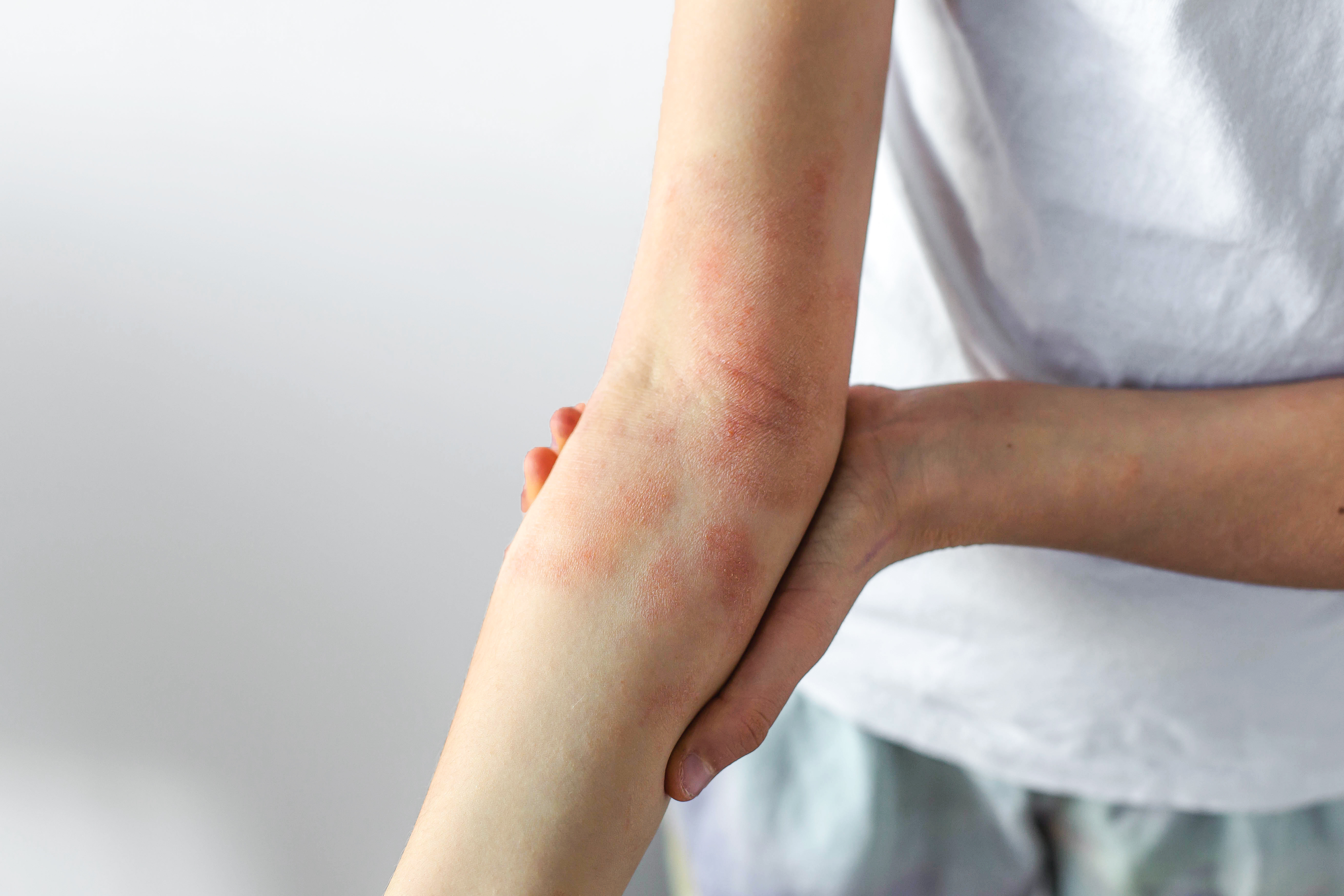
Understanding what these conditions are at a biological level is the first step toward understanding why they develop in the first place.
Acne develops when hair follicles become clogged with oil and dead skin cells. While it is often dismissed as a teenage problem, acne affects people of all ages and is influenced by hormonal changes, genetics, medications, and lifestyle factors. From a functional perspective, acne is rarely just a surface issue.
Eczema, also known as atopic dermatitis, causes dry, intensely itchy skin that can lead to swelling, cracking, and scaliness. It is a condition rooted in immune dysregulation and is often associated with other inflammatory conditions. People with eczema tend to have a compromised skin barrier, which means the skin is less effective at keeping irritants out and moisture in.
Psoriasis is an autoimmune condition in which the immune system overreacts and causes the body to produce new skin cells far too quickly, within days rather than the normal weeks. This leads to a buildup of thick, red, scaly patches called plaques that can be painful and itchy. More than 8 million Americans and 125 million people worldwide live with psoriasis, representing roughly 2 to 3 percent of the global population.
Rosacea affects approximately 5.1 percent of the world's population and is characterized by persistent facial redness, visible blood vessels, and bumps on the face. People with rosacea also experience flushing episodes, where triggers such as exercise, temperature changes, or strong emotions cause the face to flush bright red. Because of its appearance, rosacea is frequently mistaken for acne or an allergic reaction.
Often recognized as dandruff when it appears on the scalp, seborrheic dermatitis is actually a broader condition that causes red, scaly patches in areas of the body that are rich in oil glands, including the face and chest. Its development involves a combination of oil production, naturally occurring yeast organisms on the skin, and individual susceptibility. Stress and hormonal changes are known to worsen it.
Alopecia areata is an autoimmune disorder in which the immune system mistakenly attacks hair follicles, causing hair loss in small, round patches. Genetics, stress, and environmental factors all play a role in triggering it.
Hives, or urticaria, are raised, itchy red welts that can appear suddenly, often as the result of an allergic reaction. They can also be triggered by the body's stress response, as the release of histamines during a fight-or-flight reaction can manifest on the skin.
Skin cancer is the most common form of cancer in the United States. Melanoma, one of its most serious forms, can be subtle in its early stages and is often mistaken for a harmless mole. Early detection is critical, and the survival rate when caught early is remarkably high.
From a functional and holistic perspective, skin conditions rarely have a single cause. They tend to emerge from a convergence of factors that have been building over time.
Aging naturally reduces the skin's production of collagen and elastin, leading to structural changes that make the skin more vulnerable to a range of conditions.
Allergic responses to foods, medications, plants, environmental chemicals, and insect bites can manifest directly on the skin, sometimes in dramatic ways.
Environmental exposures including pollutants, allergens, irritants, and extreme weather conditions can trigger or worsen existing skin conditions.
Underlying systemic health issues such as diabetes, thyroid dysfunction, and kidney problems frequently express themselves through the skin. Bacterial and viral infections, as well as autoimmune conditions like lupus and psoriasis, can also produce significant skin symptoms.
What this tells us is that the skin is a reflection of what is happening throughout the entire body. When something is out of balance internally, the skin is often one of the first places to show it.
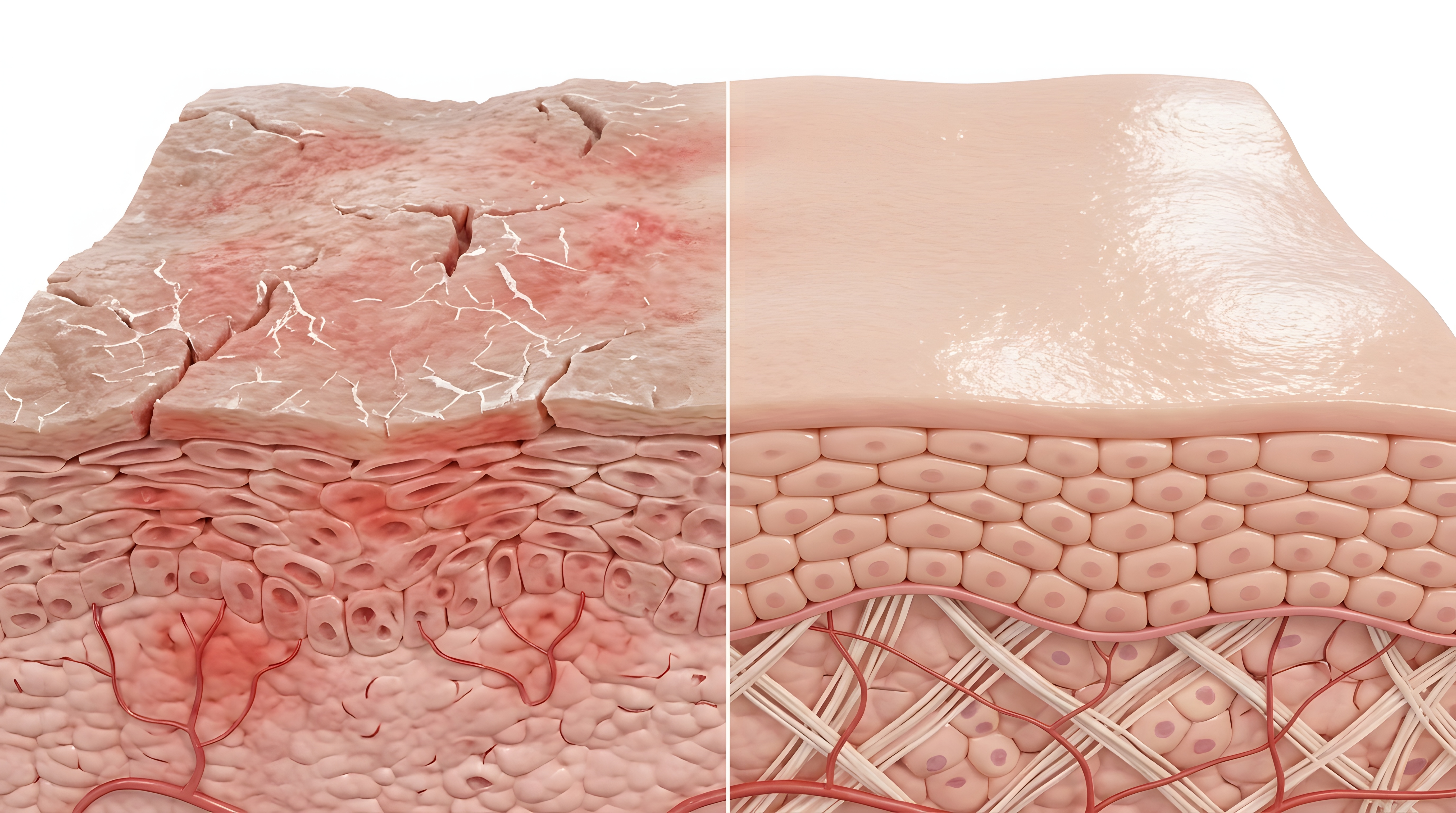
Perhaps the most underappreciated driver of skin conditions is chronic stress, and the relationship between the two is more complex than most people realize.
There is a well-documented bidirectional relationship between the skin and the mind. Poor skin health impacts mental health, and mental health impacts the health of the skin. This is not simply a matter of feeling bad about how your skin looks. It is a physiological feedback loop with real biological consequences.
When the body experiences stress, it releases cortisol. Elevated cortisol increases systemic inflammation and disrupts immune function, which directly worsens conditions like acne, eczema, rosacea, psoriasis, and alopecia. The brain also increases production of a hormone called corticotropin-releasing hormone, or CRH, during periods of chronic stress. CRH binds to oil glands in the skin and increases oil production, which can contribute directly to acne breakouts.
The fight-or-flight stress response also triggers the release of histamines, which can produce hives in susceptible individuals. And for those who smoke, the picture becomes even more concerning. Smoking has been shown to disrupt blood flow to the skin, increase inflammatory signaling molecules, trigger immune dysregulation, and interfere with hair follicle function, all of which can worsen psoriasis, contact dermatitis, alopecia, and potentially acne.
It is estimated that up to 84 percent of patients with psoriasis have comorbid mental health conditions. This is not coincidental. Skin conditions can be painful, visible, and deeply affecting to a person's sense of self, which increases the likelihood of developing depression and anxiety. Those mental health challenges then feed back into the skin through the same biological pathways, creating a cycle that can be difficult to break.
If you are someone who has been managing a skin condition for months or years, or if you have noticed recurring patterns in your skin that seem to worsen during stressful periods, it is worth stepping back and considering the bigger picture.
Your skin is communicating something. Persistent inflammation, chronic flares, and recurring breakouts are not random. They are the result of complex interactions between your immune system, your hormones, your stress response, your diet, your sleep, and your environment.
This does not mean that every skin condition signals a serious underlying illness. But it does mean that addressing only the surface of the skin, without considering what might be driving it from within, often leads to frustration and incomplete results. This is why so many people cycle through over-the-counter products without lasting improvement.
A few general areas worth reflecting on include the quality and consistency of your sleep, the composition of your diet, your relationship with chronic stress, and your exposure to environmental irritants. These are not minor lifestyle details. They are foundational inputs that directly shape how your skin behaves.
Sleep is one of the most powerful regulators of immune function and hormonal balance. The National Sleep Foundation recommends at least seven hours per night for adults, and the quality of that sleep matters as much as the quantity.
Diet has a meaningful influence on systemic inflammation. Foods high in refined sugar, processed ingredients, and certain fats have been associated with worsening inflammatory skin conditions. Diets rich in antioxidants from whole fruits and vegetables, on the other hand, help counteract oxidative stress throughout the body, including in the skin.

Regular physical activity supports stress regulation, immune function, and circulation, all of which have downstream effects on skin health. Current general guidelines suggest aiming for at least 150 minutes of moderate-intensity movement per week.
Mindfulness-based practices such as slow breathing, meditation, and yoga have been shown to reduce cortisol and calm the nervous system, which may help reduce the frequency and severity of stress-related skin flares.
Sun protection is particularly relevant for those with rosacea, as even brief sun exposure can trigger uncontrolled flushing and redness. A broad-spectrum sunscreen with an SPF of 30 or higher applied daily is a basic protective measure.
Your skin is not just a surface. It is a dynamic, living organ that reflects the state of your entire body. The rising global burden of skin conditions is not happening in a vacuum. It is unfolding alongside rising rates of chronic stress, poor sleep, inflammatory diets, and environmental exposures that the human body was never designed to navigate at this scale.
Understanding skin conditions through a functional and holistic lens means recognizing that the skin is downstream of many other systems. When those systems are under strain, the skin often bears the evidence. Paying attention to what your skin is telling you, rather than simply trying to suppress its signals, is a more meaningful and sustainable approach to long-term skin health.
If you have been dealing with a persistent skin condition, consider it an invitation to look more closely at the full picture of your health. Your skin may be the most visible clue you have and we can help put the missing pieces together to figure out the root cause of it all.