
Most people have never given much thought to a small, butterfly-shaped gland sitting quietly at the front of their neck. Yet this tiny structure, known as the thyroid, may be one of the most influential organs in the entire body. When it stops working properly, the effects can ripple through nearly every system, from your mood and metabolism to your heart rate and fertility. Millions of people are living with thyroid dysfunction right now and have no idea that this little gland is at the root of what they are experiencing.
If you have ever felt persistently exhausted despite getting enough sleep, struggled with unexplained weight changes, or noticed that your mood and energy seem completely out of your control, your thyroid may be worth paying attention to.
The thyroid is a small gland located at the base of your neck, just below your Adam's apple. It is part of the endocrine system, which is the network of glands responsible for producing and releasing hormones throughout the body. The thyroid's primary job is to produce two key hormones, known as thyroxine (T4) and triiodothyronine (T3).
These hormones act as messengers that travel through the bloodstream and influence nearly every cell in the body. They regulate your metabolism, which is essentially the rate at which your body converts food into usable energy. Beyond metabolism, thyroid hormones also play a role in regulating blood pressure, body temperature, heart rate, and how your body responds to other hormones.
When the thyroid is functioning well, most people never notice it. When it is not, the consequences can be wide-reaching and often confusing.
Thyroid disease is far more common than most people realize. Approximately 20 million people in the United States are living with some form of thyroid dysfunction. Women are five to eight times more likely than men to develop thyroid disease, making it one of the most prevalent health concerns specific to women.
Despite how common it is, thyroid disease is frequently misdiagnosed or overlooked because its symptoms often resemble those of other conditions. Fatigue, mood changes, and weight fluctuations are easy to attribute to stress, aging, or lifestyle factors, which means many people go years without understanding the true source of their symptoms.
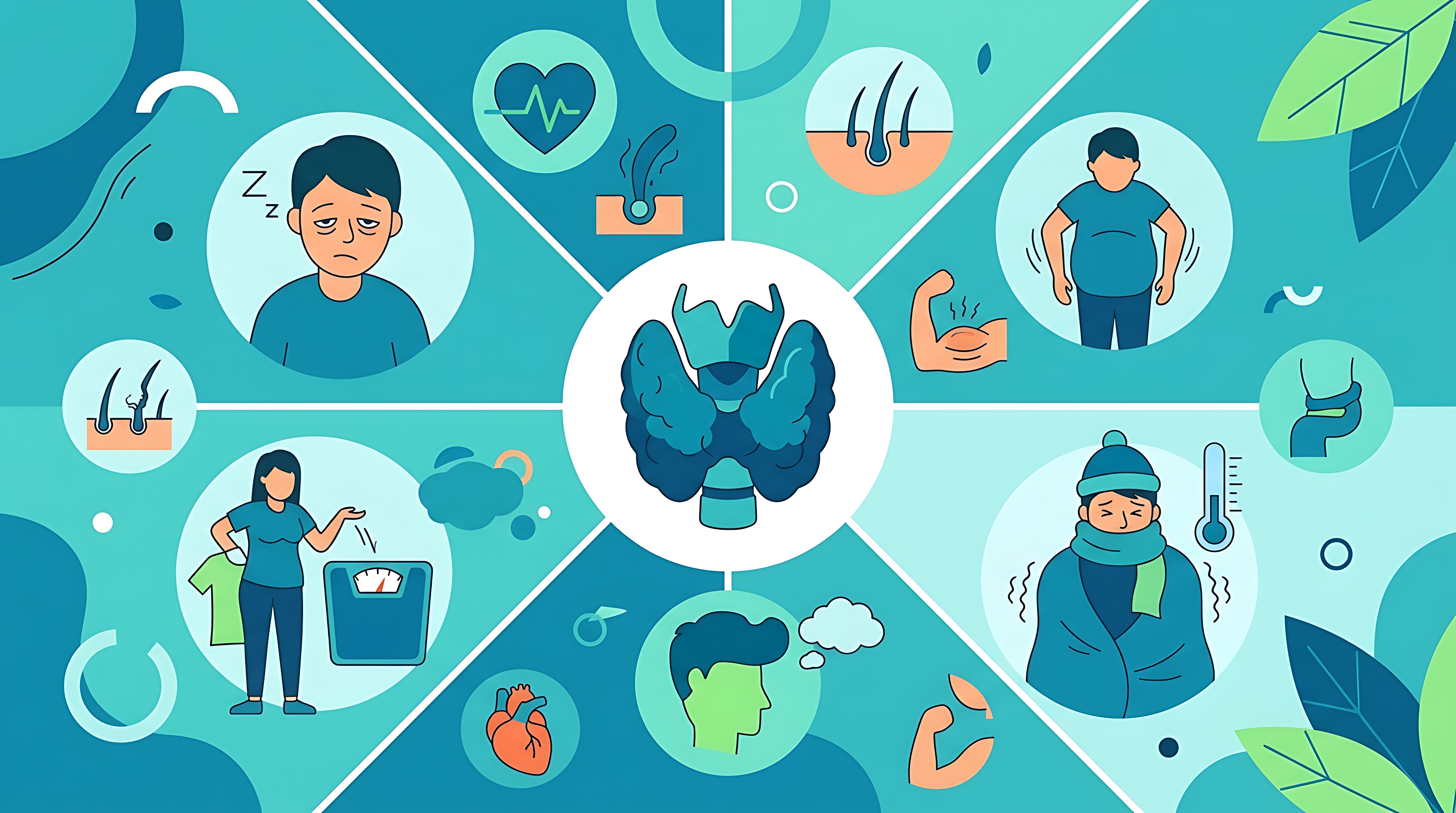
Thyroid disease generally falls into one of two categories, depending on whether the thyroid is producing too little or too much hormone.
Hypothyroidism occurs when the thyroid gland does not produce enough thyroid hormone. Without sufficient hormone output, the body's metabolic processes begin to slow down. Think of it as a fire that is not getting enough fuel to burn properly.
The most common cause of hypothyroidism is a condition called Hashimoto's thyroiditis, which is an autoimmune disorder. In autoimmune conditions, the immune system mistakenly attacks the body's own tissue. In the case of Hashimoto's, the immune system targets the thyroid gland itself, gradually impairing its ability to function.
Common symptoms of hypothyroidism include persistent fatigue, unexplained weight gain, sensitivity to cold, constipation, dry skin, brittle nails, and hair loss. Many people also experience brain fog, difficulty concentrating, and a general sense of low mood or depression. The heart rate can slow as well, a condition known as bradycardia, which affects a notable percentage of those with an underactive thyroid.
Because these symptoms develop gradually and overlap with so many other conditions, hypothyroidism is often not identified right away.
On the opposite end of the spectrum is hyperthyroidism, which occurs when the thyroid produces too much hormone. When this happens, the body's systems are essentially running in overdrive.
The most common cause of hyperthyroidism is Graves' disease, another autoimmune condition in which the immune system stimulates the thyroid to produce more hormone than the body needs.
Symptoms of hyperthyroidism tend to feel very different from those of hypothyroidism. People often experience a racing heart, unexplained weight loss, increased appetite, anxiety, shakiness, difficulty sleeping, and more frequent bowel movements. Despite feeling wired and restless, many people with hyperthyroidism are also deeply exhausted because the body is working at an unsustainable pace.
Hashimoto's thyroiditis is the underlying cause for the vast majority of cases. It is an autoimmune condition where the immune system loses its ability to recognize the thyroid as self-tissue, producing antibodies that gradually damage and destroy the gland over time.
What makes Hashimoto's particularly complex is that it does not always present as a straight decline in function. In the early or active stages of tissue destruction, stored thyroid hormones can spill into the bloodstream all at once, causing temporary spurts of hyperthyroid symptoms, like a racing heart, sudden anxiety, or heat intolerance, before dropping back into deep fatigue and hypothyroidism. This fluctuation can leave many people feeling like they are on a physical and emotional rollercoaster.
From a root-cause perspective, Hashimoto's is fundamentally an immune system dysfunction, not just a thyroid problem. Factors like chronic gut permeability ("leaky gut"), systemic inflammation, nutrient deficiencies, and prolonged stress can all contribute to the immune confusion that drives the attack. Addressing Hashimoto's effectively often requires looking beyond hormone replacement alone to focus on calming the underlying immune response and supporting whole-body resilience.
One helpful way to understand the difference between these conditions is to think of the thyroid as a thermostat. Hypothyroidism is like a thermostat set too low, where everything slows down, and the body struggles to maintain warmth and energy. Hyperthyroidism is like a thermostat set too high, where everything runs too fast, and too intensely for the body to keep up. Hashimoto's thyroiditis acts like a malfunctioning control panel that drags the temperature down, but can occasionally cause unpredictable spikes as tissue breaks down during an immune flare.
The following patterns tend to distinguish the conditions:
Hypothyroidism is generally associated with weight gain, persistent fatigue, a slow heart rate, feeling cold, depression, constipation, and dry skin.
Hyperthyroidism tends to present with unexplained weight loss, restlessness, a rapid heart rate, feeling overheated, anxiety, and diarrhea.
Hashimoto's thyroiditis primarily displays the sluggish symptoms of hypothyroidism, though active immune flares can cause temporary, uncomfortable shifts into rapid, hyperthyroid-like reactions.
All of these conditions share hair loss as a common symptom, and both underactive and overactive thyroid states are most frequently driven by underlying autoimmune dysfunction.
Beyond hypothyroidism and hyperthyroidism, there are a few other thyroid-related conditions that are important to be aware of.
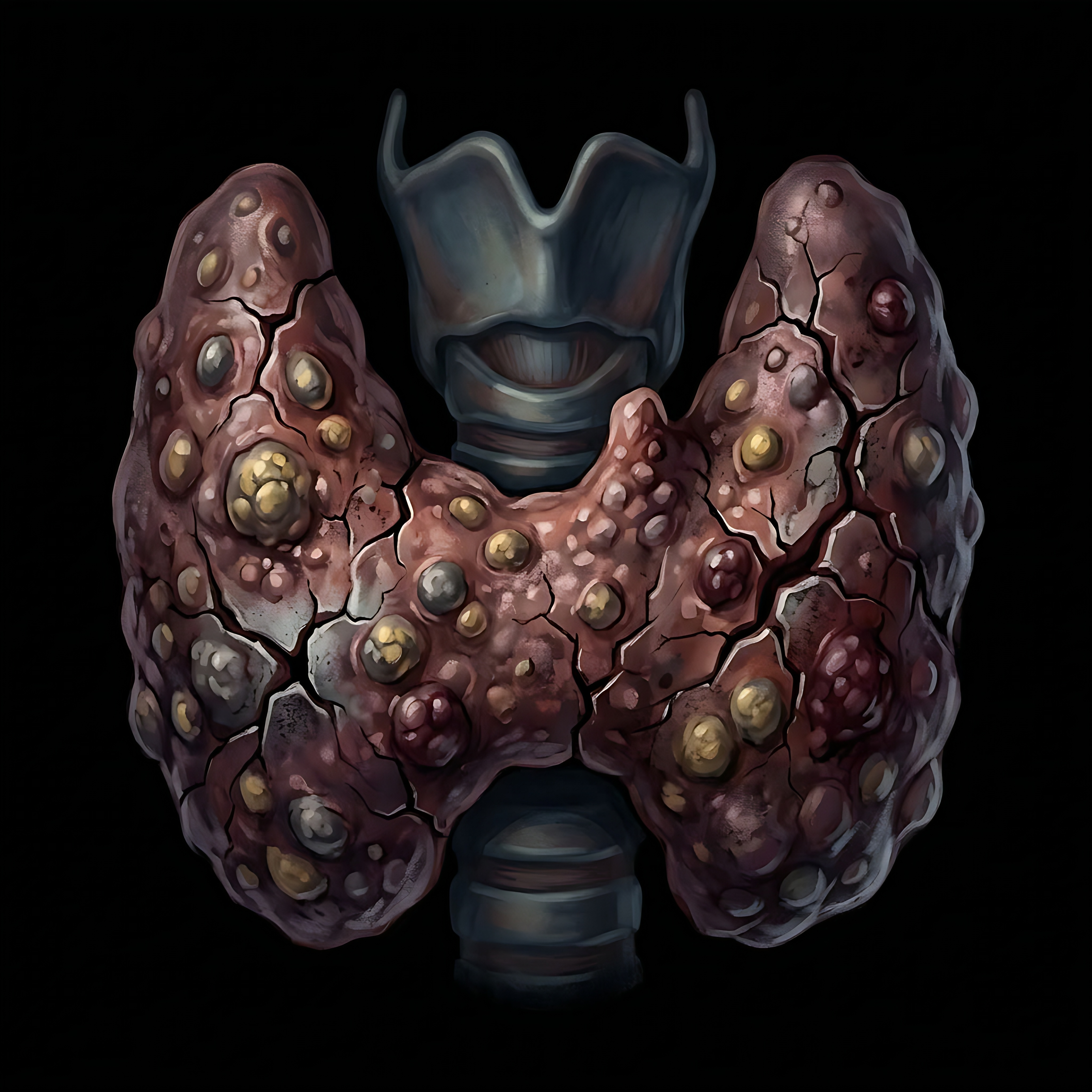
Thyroid nodules are small lumps or growths that form within the thyroid gland. Most nodules do not cause any noticeable symptoms and are discovered incidentally during imaging for unrelated reasons. In some cases, however, larger nodules can cause difficulty swallowing, changes in the voice, or a visible enlargement at the front of the neck.
While thyroid cancer is a concern when nodules are present, it is worth noting that thyroid cancer is found in fewer than 6.5 percent of all thyroid nodules, making it relatively uncommon. Still, any nodule warrants proper evaluation.
A goiter refers to an enlargement of the thyroid gland as a whole. It can result from iodine deficiency, thyroid inflammation, nodules, or certain medications. While goiter is typically non-cancerous, it can cause discomfort and, in some cases, lead to further complications if not properly monitored.
Thyroid cancer is more likely to occur in individuals who have had radiation exposure to the head, neck, or chest, though it can develop in people without any known risk factors. There are four main types of thyroid cancer, and most cases are highly treatable when identified early.
The fact that women are significantly more likely than men to develop thyroid disease is not a coincidence. Thyroid function is deeply intertwined with the female hormonal system, and disruptions in thyroid health can affect women across every stage of life.
Thyroid dysfunction can interfere with puberty, menstrual regularity, fertility, pregnancy, and the postpartum period. Hyperthyroidism, for example, can alter menstrual flow, cause irregular cycles, or stop menstruation altogether. In some cases, thyroid imbalances have been linked to impaired ovulation and infertility.
During pregnancy, the relationship between thyroid health and fetal development is particularly significant. In the first trimester, the developing baby relies entirely on the mother's thyroid hormones, as the fetal thyroid has not yet developed the ability to produce its own. This makes thyroid health during pregnancy a matter that extends beyond the mother alone.
Several factors can increase a person's likelihood of developing a thyroid condition. A family history of thyroid disease is one of the strongest predictors, as genetics play a meaningful role. The presence of other autoimmune conditions, such as lupus or type 1 diabetes, also increases the risk, since autoimmune dysfunction tends to cluster.
Being female and advancing in age are both associated with higher risk. Smoking has also been identified as a contributing factor, particularly in relation to hypothyroidism and Hashimoto's disease, as smoking can accelerate the breakdown of thyroid hormones. Prior radiation exposure to the head, neck, or chest is associated with an increased risk of thyroid cancer.
From a functional and holistic perspective, the thyroid does not exist in isolation. It is deeply responsive to the overall environment of the body, including diet, stress levels, sleep quality, and exposure to environmental toxins.
Regular physical activity has been shown to support healthy thyroid function. A sedentary lifestyle, by contrast, has been associated with lower thyroid hormone levels and an increased risk of hypothyroidism. Movement supports metabolism and helps the thyroid operate more efficiently.
Diet also plays a meaningful role. Diets high in processed foods and refined sugar have been associated with increased inflammation in the body, which may contribute to the development of autoimmune thyroid conditions such as Hashimoto's and Graves' disease. Processed foods can also disrupt the gut microbiome, and emerging research continues to highlight the connection between gut health and immune system regulation.
Certain nutrients are particularly relevant to thyroid function. Iodine is essential for the production of thyroid hormones and is found in foods such as seaweed and eggs. Selenium, found in Brazil nuts, supports the conversion of T4 into the more active T3 hormone. Zinc, found in meat and legumes, also plays a supporting role in thyroid hormone production.
Managing stress, prioritizing quality sleep, and reducing exposure to endocrine-disrupting chemicals, which are compounds found in certain plastics, pesticides, and personal care products, are all considerations that a holistic approach to thyroid health would include.
Thyroid disease is typically identified through blood tests that measure levels of thyroid-stimulating hormone (TSH), as well as T3 and T4 directly. TSH is produced by the pituitary gland and acts as a signal to the thyroid to produce more or less hormone. Abnormal TSH levels are often the first indication that something is off.
The thyroid is a small gland with an enormous reach. Its influence extends to nearly every system in the body, and when it is out of balance, the effects can be subtle at first but increasingly difficult to ignore over time.
What makes thyroid disease particularly worth understanding is how frequently it goes unrecognized. The symptoms are common, the overlap with other conditions is significant, and many people normalize how they feel without ever investigating the root cause.
From a holistic standpoint, the thyroid is a reflection of the body's broader state of balance. Chronic stress, poor nutrition, environmental exposures, gut dysfunction, and immune dysregulation all have the potential to influence how well this gland performs. Supporting thyroid health, therefore, is not simply about addressing the gland itself but about creating the conditions in which the entire body can function more optimally.
If something feels persistently off with your energy, your weight, your mood, or your heart rate, it is worth paying attention to. A simple blood test can reveal a great deal about what your thyroid is doing, and that information can be the starting point for understanding your health in a much deeper way. If you're ready to get to the bottom of how you feel, we're here to help.