
Imagine your body's defense system, the very system designed to protect you, suddenly turning against you. No warning. No clear cause. Just a slow, confusing unraveling of your health that takes years to explain. For millions of people, this is not a hypothetical scenario. It is their daily reality.
Autoimmune disease is one of the most widespread and least understood health challenges of our time. Yet despite how common it is, most people know very little about it until they or someone they love receives a diagnosis. If you have ever felt persistently exhausted, experienced unexplained joint pain, or noticed symptoms that seem to come and go without reason, understanding autoimmune disease may be one of the most important things you do for your health.
The numbers are striking. Estimates suggest that approximately 1 in 15 people in the United States is living with some form of autoimmune disease. That translates to roughly 50 million Americans. To put that in perspective, that is more people than are currently living with heart disease or cancer.
There are more than 140 identified autoimmune conditions, ranging from well-known diseases like rheumatoid arthritis, Type 1 diabetes, and multiple sclerosis, to dozens of rarer conditions that many people have never heard of.
Perhaps most notably, autoimmune disease disproportionately affects women. Nearly 80 percent of those diagnosed are female, making it one of the leading causes of chronic illness among women in their prime years of life.
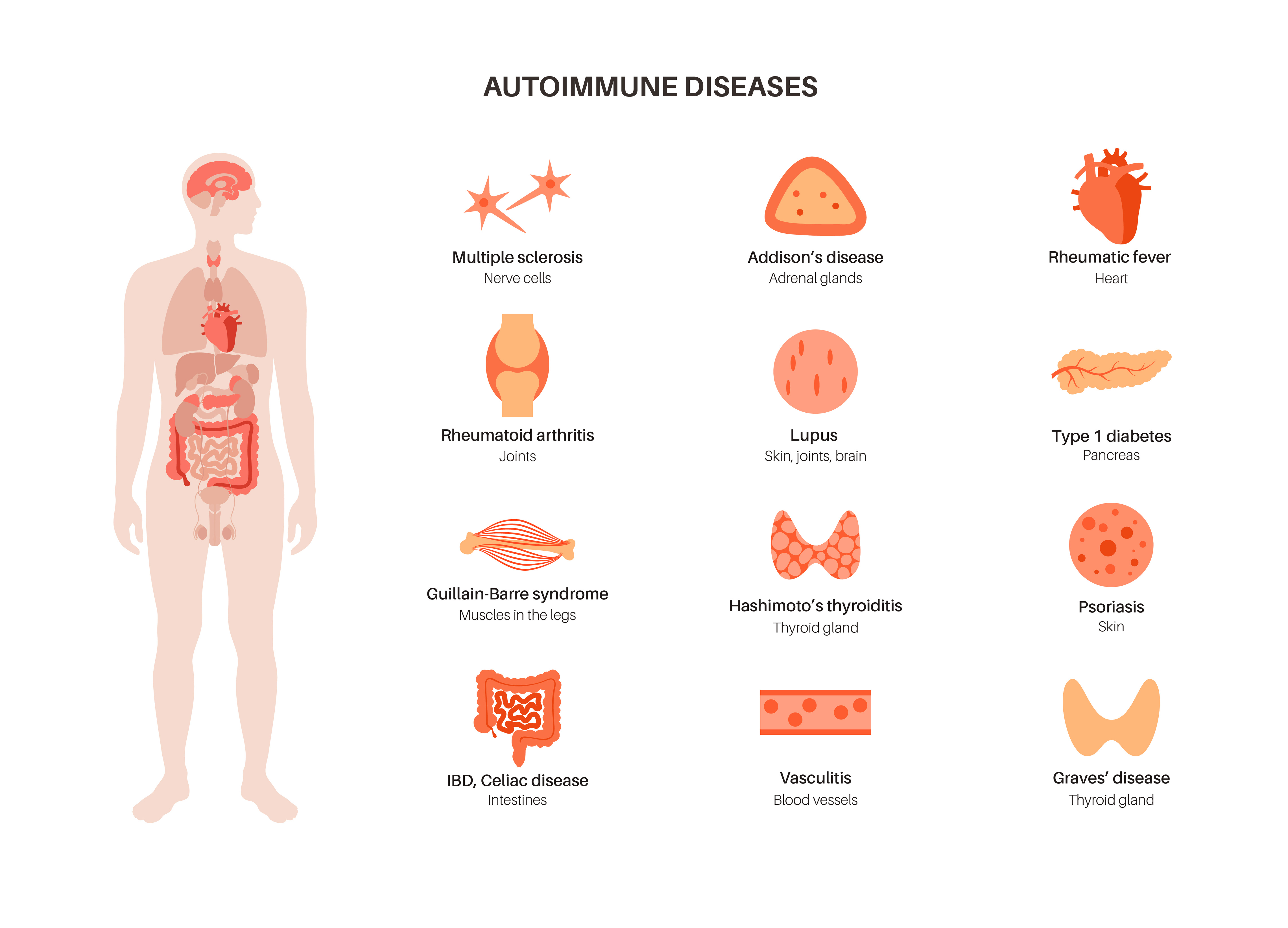
To understand autoimmune disease, it helps to think of your immune system as a highly trained army. Its job is to identify and destroy foreign invaders like bacteria and viruses while leaving your own healthy cells completely alone. In a healthy body, this system works with remarkable precision.
In autoimmune disease, that precision breaks down. The immune system loses its ability to distinguish between what belongs in the body and what does not. As a result, it begins attacking the body's own healthy tissues, organs, and cells as though they were the enemy.
Depending on which part of the body is being targeted, the resulting disease can look very different. In rheumatoid arthritis, the immune system attacks the lining of the joints. In Hashimoto's thyroiditis, it attacks the thyroid gland. In lupus, it can attack multiple systems at once, including the kidneys, heart, lungs, and brain. In Type 1 diabetes, it destroys the insulin-producing cells of the pancreas.
The common thread in all of these conditions is a misdirected immune response that, over time, causes significant damage to the body.
One of the most frustrating aspects of autoimmune disease is how long it can take to receive a proper diagnosis. According to the Autoimmune Association, the average person sees multiple physicians over the course of four years before finally getting answers.
The reason for this delay is rooted in the nature of the symptoms themselves. Fatigue, joint pain, recurring low-grade fevers, swollen glands, and general malaise are not unique to autoimmune disease. These are symptoms that overlap with dozens of other conditions, making it easy for them to be dismissed or misattributed.
Symptoms also tend to fluctuate. They may be severe for a period of time and then seem to disappear entirely, only to return again without warning. This pattern of flares and remissions can make it difficult for both patients and physicians to connect the dots.
Some specific warning signs worth paying attention to include persistent fatigue that does not improve with rest, unexplained joint pain or swelling, recurring fevers without an obvious cause, and symptoms that seem to shift or move around the body over time.
One of the most important and often overlooked aspects of autoimmune disease is the relationship between the gut and the immune system. Approximately 70 percent of the body's immune cells reside in the gastrointestinal tract. This means that the health of your gut has a direct and significant impact on how your immune system functions.

When the gut lining becomes compromised, a condition often referred to as increased intestinal permeability, it can allow substances to pass into the bloodstream that would not normally be there. This can trigger immune responses and contribute to the kind of systemic inflammation that is associated with autoimmune conditions.
The diversity and balance of the gut microbiome, the trillions of bacteria that live in the digestive tract, also plays a meaningful role. A microbiome that is out of balance can influence immune regulation in ways that may worsen autoimmune symptoms.
Supporting gut health through fiber-rich foods, fermented foods, and an overall anti-inflammatory dietary approach is one of the most foundational things a person with an autoimmune condition can consider.
From a functional and holistic perspective, food is not simply fuel. It is information that communicates directly with your immune system, your gut, and your inflammatory pathways. What you eat on a daily basis has a real and measurable effect on the level of inflammation in your body.
Research has consistently pointed to the Mediterranean diet as one of the most beneficial dietary patterns for people with autoimmune conditions. Rich in vegetables, fruits, whole grains, legumes, healthy fats, and lean proteins, this way of eating has been shown in multiple studies to reduce systemic inflammation and improve physical function in conditions like rheumatoid arthritis.
Leafy greens such as kale, arugula, and Swiss chard are particularly valuable. They are rich in vitamins A, C, and K, as well as folate and fiber, and their antioxidant content helps combat the oxidative stress that drives inflammation.
On the other side of the equation, processed foods, refined sugars, and foods high in unhealthy fats can actively promote inflammation. Some individuals with autoimmune conditions also find that they have sensitivities to specific foods such as gluten or dairy, and that reducing or eliminating these can have a noticeable impact on how they feel.
A more intensive dietary approach that has gained attention in functional medicine circles is the Autoimmune Protocol, or AIP diet. This elimination-based approach removes a wide range of potentially inflammatory foods in order to allow the gut to settle and the immune system to recalibrate. It is a significant undertaking and is best approached with the guidance of a knowledgeable healthcare provider.
There is a well-established connection between psychological stress and immune function, and for people with autoimmune disease, this connection is particularly significant. Sustained stress has been shown to increase the risk of developing an autoimmune condition, and for those already living with one, stress is a well-recognized trigger for flares.
When the body is under stress, it initiates a cascade of physiological responses. Cortisol and other stress hormones are released, inflammatory pathways are activated, sleep is disrupted, digestion is impaired, and hormonal balance is affected. Each of these downstream effects has implications for immune regulation.
This does not mean that stress causes autoimmune disease in a simple or direct way. But it does mean that the nervous system and the immune system are deeply interconnected, and that tending to one inevitably affects the other.
Practices such as meditation, yoga, deep breathing, and time spent in nature are not simply wellness trends. They are evidence-informed tools for downregulating the stress response and supporting immune balance. Keeping a journal to track symptoms alongside daily activities and stressors can also be a valuable way to identify patterns and potential triggers.
Sleep is not a passive state. It is one of the most active and essential processes the body undertakes each day. During sleep, the immune system performs critical surveillance and repair functions. Inflammatory markers are regulated. Hormones are balanced. The gut microbiome is supported.
When sleep is consistently disrupted or insufficient, the consequences for immune health are significant. Poor sleep quality has been linked to increased gut permeability, elevated inflammation, and worsened autoimmune outcomes.
Most adults require between seven and nine hours of quality sleep per night. For someone managing an autoimmune condition, this is not a luxury. It is a clinical necessity.
Creating a consistent sleep schedule, limiting screen exposure before bed, avoiding caffeine and alcohol in the evening, and establishing a calming nighttime routine are all meaningful steps toward protecting the quality of your rest.
Vitamin D occupies a unique position in immune health. It functions less like a traditional vitamin and more like a hormone, with receptors found throughout the immune system. Deficiencies in vitamin D have been consistently linked to a higher risk of autoimmune conditions, and low levels are commonly found in people already living with these diseases.
The primary source of vitamin D for most people is sunlight. Spending time outdoors, particularly during the middle of the day, supports the body's natural production of this important nutrient.

From a functional and holistic standpoint, autoimmune disease is rarely the result of a single cause. It tends to emerge from a complex interplay of genetic predisposition, gut health, nutritional status, stress load, sleep quality, environmental exposures, and emotional well-being.
This complexity is actually empowering, because it means there are many points of entry for supporting the body. Rather than focusing on any one intervention, a holistic approach considers the whole person and looks for ways to reduce the overall burden on the immune system across multiple domains of health.
Autoimmune disease is a complex, widespread, and deeply personal health challenge that affects tens of millions of people, the majority of whom are women. It is a condition that can take years to diagnose, fluctuates unpredictably, and touches virtually every aspect of a person's life.
Understanding what is happening in the body, recognizing the early warning signs, and appreciating the many factors that influence immune function are all important steps toward navigating this terrain with greater clarity and confidence.
The body is always working toward balance. Supporting that process through thoughtful attention to diet, sleep, stress, movement, gut health, and emotional well-being is not a replacement for medical care. It is a complement to it, and one that can make a meaningful difference in how a person feels day to day.
If any of this resonates with your own experience, we can help you understand your individual situation and build a path forward that honors the full complexity of who you are.