
Have you ever felt a sharp, shooting pain that starts in your lower back and travels all the way down your leg? Maybe it felt like electricity, or like your leg had fallen asleep but refused to wake up. If so, you are not alone. In fact, nearly 40% of Americans will experience this exact sensation at some point in their lives. It has a name, and it is called sciatica.
But here is what most people do not realize: sciatica is not actually a diagnosis. It is a signal. It is your body communicating that something deeper is happening, and understanding what that signal means could change the way you think about your health entirely.
Before we can understand sciatica, we need to understand the nerve at the center of it all.
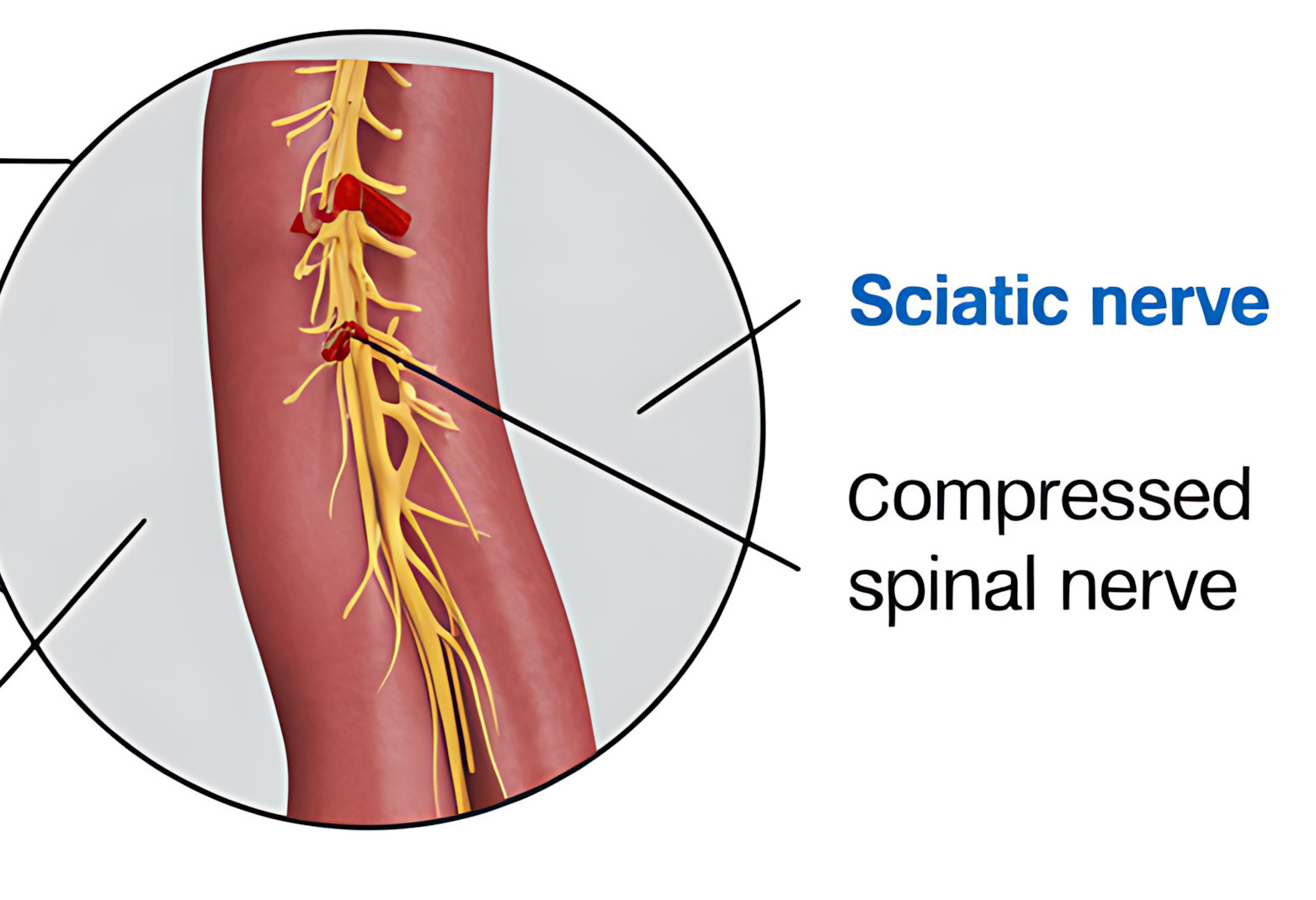
The sciatic nerve is the longest and widest nerve in the entire human body. It originates in the lower back, travels through the buttocks, and runs down the length of each leg, ending just below the knee. This nerve is responsible for controlling several muscles in the lower legs and for supplying sensation to the skin of the foot and the majority of the lower leg.
When this nerve becomes irritated, compressed, or inflamed, the result is what we call sciatica. The pain, numbness, or tingling that people feel is simply the nerve's way of communicating distress. Think of it like a garden hose. When something pinches the hose, the flow of water is disrupted. The sciatic nerve works in a similar way. When something interferes with its normal function, the signals it sends to and from the brain become disrupted, and that disruption is what you feel.
Sciatica does not discriminate widely, but certain groups do experience it more frequently than others.
Men between the ages of 30 and 50 tend to be statistically more likely to develop sciatica. This is often tied to lifestyle factors such as physically demanding work, prolonged periods of sitting, and repetitive strain on the spine. However, women are certainly not immune, particularly during pregnancy, when significant changes occur in the muscles and ligaments of the lower body.
It is also worth noting that sciatica rarely appears before the age of 20 unless a traumatic event is involved. This tells us something important from a functional health perspective: sciatica is largely a condition that develops over time, shaped by the accumulated stress we place on our bodies throughout our lives.
The experience of sciatica varies from person to person, but there are some hallmark characteristics that tend to appear consistently.
The most defining feature is pain that radiates down one leg, following the path of the sciatic nerve. This is what separates sciatica from ordinary back pain. If you have lower back discomfort without any leg involvement, it is likely not sciatica.
Common sensations include:
The intensity can range from a mild, dull ache to a debilitating, sharp pain that makes everyday movement feel nearly impossible. For many people, sitting for extended periods is particularly aggravating, which has significant implications in a culture where most of us spend the majority of our day in a chair.
From a functional health perspective, understanding the root cause of sciatic nerve irritation is essential. There are several structural and physiological reasons why the nerve may become compressed or inflamed.
Herniated Discs
This is the most common culprit. Between each vertebra in your spine sits a soft, cushion-like disc that absorbs shock and allows for movement. When one of these discs becomes slightly displaced or damaged, it can press directly on the sciatic nerve. This is often the result of years of mechanical stress, poor posture, or sudden strain.
Spinal Stenosis
This refers to a narrowing of the spinal canal, the channel through which the spinal cord and nerves travel. As the canal narrows, it can compress the sciatic nerve, leading to the familiar symptoms.

Bone Spurs
Over time, bony growths can develop along the spine. These growths, known as bone spurs, can press against the sciatic nerve and cause irritation.
Pregnancy
During pregnancy, the body undergoes significant hormonal and structural changes. Ligaments loosen, the center of gravity shifts, and additional weight is placed on the lower spine, all of which can increase the likelihood of sciatic nerve compression.
Tumors
Though less common, tumors in or near the spine can also place pressure on the sciatic nerve and should always be ruled out in persistent or unusual cases.
From a holistic standpoint, the risk factors for sciatica are deeply connected to how we live our daily lives. This is both humbling and empowering, because many of these factors are within our influence.
Excess Body Weight
Carrying extra weight places additional mechanical load on the lumbar spine and surrounding structures. Over time, this increased pressure can contribute to disc degeneration and nerve compression.
Weak Core Muscles
The muscles of the abdomen and back serve as a natural support system for the spine. When these muscles are underdeveloped or imbalanced, the spine is left more vulnerable to stress and injury. This is a foundational concept in functional health: the body functions as an integrated system, and weakness in one area creates vulnerability in another.
Prolonged Sitting
Modern life has created an epidemic of sedentary behavior, and the spine pays the price. Extended sitting compresses the lumbar spine and can directly aggravate the sciatic nerve. This is worth considering for anyone who works at a desk or spends long hours in a vehicle.
Poor Posture and Improper Lifting
How we hold our bodies and how we move through daily tasks matters enormously. Repetitive strain from improper mechanics, whether at a desk or lifting heavy objects, accumulates over time and contributes to the structural changes that lead to sciatica.
Smoking and Obesity
Research has shown that both smoking and obesity increase the risk of hospitalization related to sciatica. Smoking, in particular, is known to impair circulation and accelerate disc degeneration, making it a meaningful risk factor that extends well beyond its commonly known effects on the lungs and heart.
Diabetes
Elevated blood sugar over time can damage nerves throughout the body, a condition known as peripheral neuropathy. This nerve vulnerability can make individuals with diabetes more susceptible to sciatic nerve issues.
Understanding how sciatica tends to progress over time is important for setting realistic expectations and recognizing when something may be more serious.
For most people, an acute episode of sciatica resolves within four to six weeks. Studies suggest that approximately 75% of patients begin to see improvement within the first four weeks. This is encouraging news for those in the early stages of an episode.
However, the picture becomes more complex when we look at longer timelines. Research indicates that 20 to 30% of people continue to experience symptoms one year after their initial episode. And once a person has had more than one episode of sciatica, the condition is more likely to become chronic, either flaring periodically or causing ongoing discomfort.
This pattern reflects something that functional health practitioners observe consistently: when the underlying conditions that allowed sciatica to develop in the first place are not addressed, the body remains vulnerable to recurrence.
While sciatica is generally not a medical emergency, there are specific warning signs that require immediate attention. Recognizing these signs could be critically important.
Seek emergency care right away if you experience any of the following:
Loss of bladder or bowel control. This is one of the most serious red flags and may indicate a condition called cauda equina syndrome, where the bundle of nerves at the base of the spinal cord is severely compressed. This is a surgical emergency.
Saddle numbness. Numbness in the groin, genitals, or anal region is another major warning sign, particularly if it is new or worsening.
Progressive leg weakness. If the weakness in your leg is getting worse rather than staying stable, this suggests ongoing and increasing nerve compression that requires urgent evaluation.
Foot drop. If your foot is dragging when you walk, or you are unable to lift the front part of your foot, this is a serious neurological sign.
Fever accompanying back pain. This combination may indicate a spinal infection, which can rapidly worsen nerve symptoms.
Pain following a significant injury. If your sciatic symptoms began after a car accident, fall, or other traumatic event, seek emergency evaluation promptly.
From a functional and holistic perspective, sciatica is rarely just a mechanical problem. It is often a reflection of how the body has been functioning, or struggling to function, over a long period of time.
Chronic inflammation, poor circulation, nutritional deficiencies, structural imbalances, and the accumulated effects of stress all play a role in how resilient or vulnerable the nervous system and musculoskeletal system are. When we view sciatica through this lens, it becomes less of an isolated event and more of a meaningful signal worth listening to.
The sciatic nerve does not become irritated overnight. It is typically the result of years of patterns, whether in how we sit, how we move, what we eat, how we manage stress, or how we care for our bodies overall. Understanding this does not place blame on the individual. Rather, it opens the door to a more thoughtful and comprehensive approach to long-term health.

Supporting spinal health through regular, gentle movement is broadly beneficial. Addressing chronic inflammation through diet and lifestyle choices matters more than most people realize. Maintaining a healthy body weight reduces the mechanical burden on the spine. Prioritizing core strength and postural awareness creates a more stable foundation for the entire body. And reducing prolonged sitting, even in small increments throughout the day, can have a meaningful impact over time.
These are not quick fixes. They are long-term investments in the health of your nervous system and your body as a whole.
Sciatica is one of the most common nerve-related conditions in the world, yet it remains widely misunderstood. It is not simply a back problem. It is a signal from the body that something along the path of the longest nerve in the human body is under stress.
Nearly half of all Americans will experience sciatica at some point in their lives. For some, it will resolve relatively quickly. For others, it will become a recurring or chronic challenge. The difference often lies in how well the underlying conditions are understood and addressed.
If you are currently experiencing sciatic symptoms, the most important first step is to take them seriously and seek appropriate evaluation from a qualified healthcare provider. And if you are not currently affected, consider this an invitation to reflect on the daily habits and patterns that either support or undermine the long-term health of your spine and nervous system.
Your body is always communicating. Sciatica is simply one of the louder messages it can send and we can help ease the symptoms and get you back to optimal functioning.