
If your child is still wetting the bed and you have tried everything the pediatrician suggested without lasting results, you are not alone. Bedwetting is one of the most common and least talked about childhood struggles, and for many families, it feels like a problem with no real answer. But what if the reason your child wets the bed has less to do with behavior or willpower and more to do with how their nervous system is functioning? That question is at the heart of how functional and holistic practitioners approach this issue, and the answers may surprise you.

Bedwetting, medically referred to as nocturnal enuresis, is defined as the involuntary loss of urine during sleep at an age when a child would otherwise be expected to stay dry. It is not a disease. It is not a character flaw. And it is far more common than most people realize.
Research shows that approximately one in five children still wet the bed at least once a month by age five. Around 10 percent of seven-year-olds continue to struggle with it, and between one and three percent of teenagers are still affected. In one large study, children were considered to have significant bedwetting if it occurred two or more nights per week, and the prevalence at age nine and a half was around eight percent.
There is also a strong genetic component. If one or both biological parents experienced bedwetting as children, their child is significantly more likely to experience it as well. One study found that the odds of a child being a severe bedwetter were 3.6 times higher when the mother had a history of nocturnal enuresis.
For decades, bedwetting was assumed to be a psychological problem rooted in emotional disturbance or poor parenting. Modern research has largely overturned that view. The vast majority of bedwetting cases are now understood to have physiological roots, meaning something in the body is not functioning the way it should.
Here is what functional and holistic practitioners look at when trying to understand why a child is wetting the bed.
One of the most foundational concepts in understanding bedwetting is the relationship between the nervous system and the bladder. The bladder does not operate independently. It relies on a constant back-and-forth communication with the brain through a network of nerves. When the bladder is full, nerve receptors send a signal upward to the brain. The brain then sends a signal back telling the body to either hold or release.
In children who wet the bed, this communication pathway is often disrupted. The sleeping child's brain either does not receive the signal that the bladder is full, or the bladder does not receive the command to hold. The result is involuntary urination during sleep.
The nerves responsible for bladder control exit the spinal column in the lower back, specifically through the lumbar vertebrae and the sacrum. The sacral nerves, particularly those at levels S2 through S4, carry both motor signals to the muscles of the bladder and sensory signals back to the brain.
In children, it is made up of five separate segments that have not yet fully fused. This makes the childhood sacrum significantly more vulnerable to misalignment from everyday events like falls, tumbles during play, or even the physical stress of the birth process itself. When these spinal segments shift out of their proper position, they can create pressure on the surrounding nerves, essentially interfering with the signals traveling between the brain and the bladder. Holistic and chiropractiers refer to these misalignments as subluxations.
Some children produce lower-than-normal levels of a hormone called anti-diuretic hormone, or ADH. This hormone signals the kidneys to reduce urine production during sleep. When ADH levels are insufficient, the kidneys continue producing urine at a normal daytime rate throughout the night, overwhelming the bladder's capacity and increasing the likelihood of bedwetting.
This connection surprises many parents. When a child is constipated, the buildup of stool in the bowel creates physical pressure on the bladder. This pressure can reduce the bladder's functional capacity and trigger involuntary urination. Chronic constipation can also weaken the muscles and ligaments of the pelvic floor over time, further compromising bladder control.
Certain foods have been identified as potential bladder irritants. Research has suggested that foods such as dairy, chocolate, and eggs can cause bladder hypersensitivity in some children, directly contributing to bedwetting. Other known dietary triggers include carbonated beverages, acidic fruit juices, tomato-based products, spicy foods, and high-sugar foods and drinks.
The autonomic nervous system, or ANS, is the part of the nervous system responsible for automatic bodily functions, including bladder control. It has two branches: the sympathetic branch, which governs the stress response, and the parasympathetic branch, which governs rest and recovery functions.
Research has found that children with nocturnal enuresis frequently show signs of autonomic dysregulation, meaning the two branches of the ANS are not working in proper balance. One measurable marker of this imbalance is altered heart rate variability, which is used clinically to assess how well the autonomic nervous system is functioning.
Research has pointed to magnesium deficiency as a potential contributing factor in bedwetting. Magnesium plays an important role in nervous system function, and insufficient levels may reduce the nervous system's responsiveness and ability to regulate bladder control. Studies have also suggested associations between low vitamin D levels and omega-3 fatty acid intake and increased rates of nocturnal enuresis.
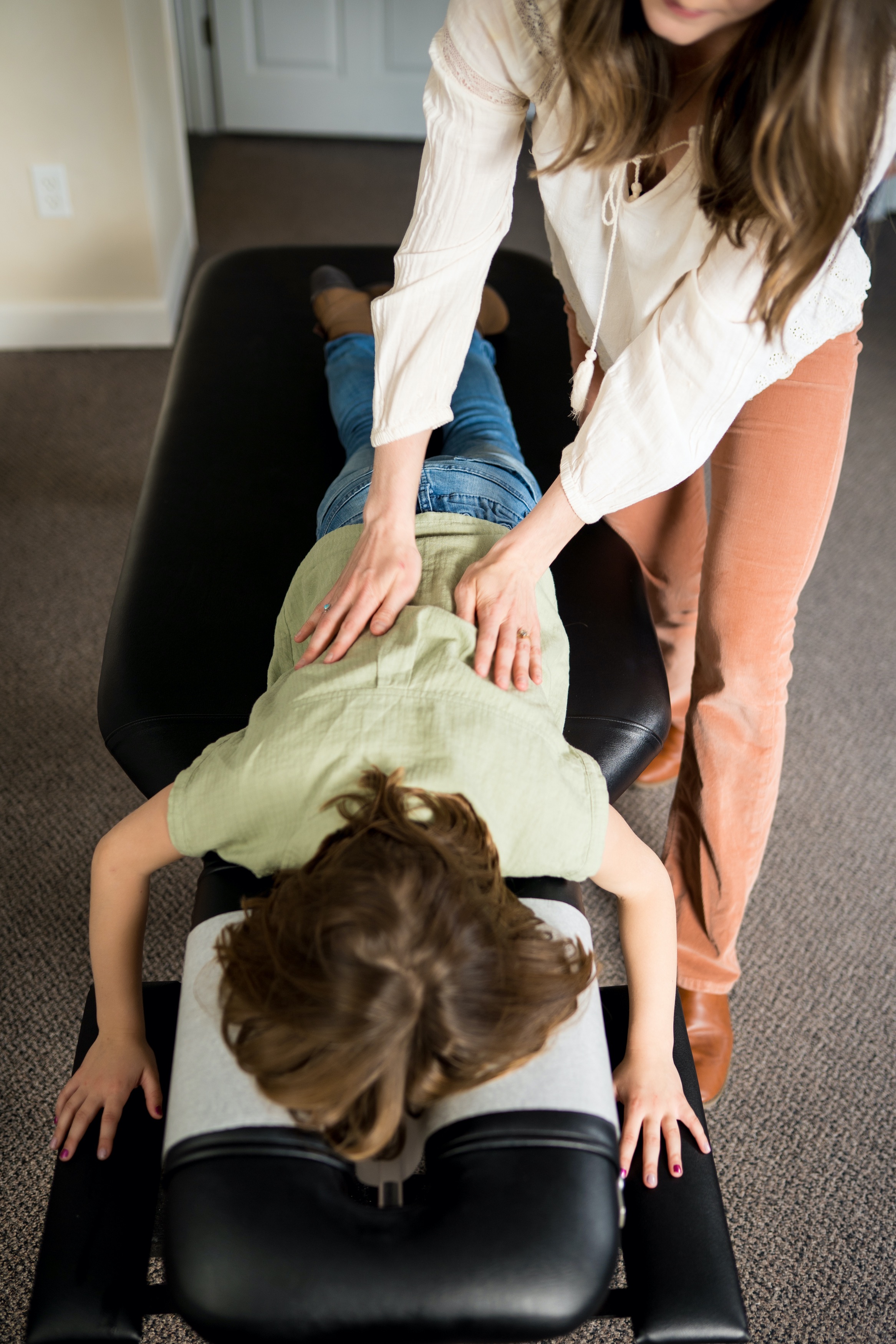
Chiropractic care, approaches bedwetting through the lens of spinal health and nervous system function. The core idea is straightforward: if spinal misalignments in the lumbar and sacral regions are interfering with the nerve signals that control bladder function, correcting those misalignments may restore proper communication between the brain and the bladder.
When a chiropractor identifies and addresses a subluxation in the lower spine, the goal is to remove the interference so that the nervous system can function as it was designed to. For the bladder, this means the brain can more accurately receive the signal that the bladder is full, and the bladder can more effectively receive the command to hold until an appropriate time.
It is worth noting that pediatric chiropractic adjustments are nothing like what most adults imagine. They use very gentle, precise pressure, often described as no more force than you would use to test the ripeness of a tomato. They are designed to be comfortable and safe for children of all ages.
Several clinical studies have examined the relationship between chiropractic care and bedwetting, and the results are worth understanding.
In a 1994 clinical trial, 46 children who frequently wet the bed were divided into two groups. One group received ten weeks of chiropractic care, and the other received a sham intervention. At the end of the study, children in the chiropractic group had nearly two more dry nights per two-week period compared to the control group. Notably, 25 percent of the children receiving chiropractic care experienced a 50 percent or greater reduction in wet nights. None of the children in the control group achieved that level of improvement.
A 2005 study published in the Journal of Manipulative and Physiological Therapeutics followed 171 children receiving chiropractic care for bedwetting. Again, approximately one quarter of participants experienced a 50 percent reduction in wet nights.
Another study involving 165 children who were wetting the bed six nights per week found a reduction to approximately three nights per week after only a small number of chiropractic adjustments.
Functional medicine does not look at bedwetting as an isolated symptom. It looks at the whole child and asks what underlying imbalances might be contributing to the problem.
This includes evaluating the quality of the child's diet, identifying potential food sensitivities, assessing nutritional status, addressing constipation, and considering the overall state of the autonomic nervous system. The vagus nerve, which is one of the primary components of the parasympathetic nervous system, is of particular interest. When vagus nerve function is optimized, communication between the brain and the body's organs, including the bladder, tends to improve.
From a functional perspective, bedwetting is rarely caused by just one thing. It is usually the result of several overlapping factors that, together, create a system that is not functioning at its best. Addressing those factors one by one, in a thoughtful and individualized way, is the foundation of this approach.
Bedwetting is one of those childhood challenges that tends to be managed rather than understood. Conventional approaches often focus on reducing symptoms without addressing the underlying reasons the body is struggling in the first place. We take a different path, one that begins with curiosity about root causes and a commitment to supporting the body's natural ability to regulate itself.
The research on chiropractic care and bedwetting, offers meaningful evidence that spinal health and nervous system function are directly relevant to this issue. Combined with a functional medicine lens that considers diet, nutrition, and autonomic balance, this approach gives families a more complete picture of what may be happening and why.
If your child is struggling with bedwetting, it may be worth exploring these perspectives. Every child is different, and there is no single answer that works for everyone. But understanding the deeper physiology behind bedwetting is a powerful first step toward finding one and we can help you find that understanding.