
Behind Your Gut Dysfunction
What if the fatigue you cannot shake, the anxiety that creeps in without warning, the skin that never quite clears up, and the bloating that follows almost every meal were all connected to one single system in your body? For millions of people, that connection is real, and it starts in the gut.
Gut health has become a buzzword in recent years, but the science behind it is far more serious than the wellness industry lets on. Digestive diseases account for over 100 million clinical visits and $142 billion in healthcare costs every year in the United States alone. This is not a fringe topic. It is one of the most significant and consistently overlooked areas of modern health, and it affects virtually everyone at some point in their lives.
What Does "Gut Dysfunction" Actually Mean?
The term gut dysfunction is a broad way of describing what happens when your digestive system is not working the way it should. This can look very different from person to person. For some, it shows up as chronic heartburn or bloating. For others, it is unpredictable bowel habits, persistent fatigue, or even mood instability.
Some of the most common forms of gut dysfunction include the following.
GERD, or gastroesophageal reflux disease, is the most prevalent gastrointestinal disorder in the United States, affecting approximately one in five adults. Most people know it as acid reflux or heartburn.
Irritable Bowel Syndrome (IBS) affects roughly 11 percent of the global population. Despite how common it is, it remains chronically underdiagnosed because its symptoms overlap with so many other conditions.
Chronic constipation affects about 15 percent of people worldwide. From a functional health perspective, this condition is closely tied to imbalances in the gut microbiome, particularly a reduction in the bacteria that produce butyrate, a compound that plays a critical role in gut lining health.
Dysbiosis refers to an imbalance in the gut microbiome, the vast community of microorganisms living in your digestive tract. When this community falls out of balance, the downstream effects can reach far beyond the gut itself.
Leaky gut, or increased intestinal permeability, occurs when the lining of the gut becomes compromised, allowing substances that should stay inside the digestive tract to pass into the bloodstream. The immune system responds to these foreign substances by triggering inflammation, and that inflammation is a key driver of many chronic diseases.
Disorders of gut-brain interaction are conditions that cause real, ongoing symptoms like pain, bloating, and altered bowel habits, but do not show any structural abnormality on routine testing. These are not imagined symptoms. They reflect a disruption in the complex communication network between the gut and the brain.
Your Gut Is Talking to Your Brain

This is where things get genuinely fascinating, and where many people begin to connect dots they never thought to connect before.
The gut and the brain are in constant, bidirectional communication through what is known as the gut-brain axis. This is not a metaphor. It is a physical network of nerves, hormones, and immune signals that links your digestive system to your central nervous system.
Here is a striking fact that puts this into perspective: over 90 percent of the body's serotonin, often called the "happy hormone," is produced in the gut, not the brain. This means that the state of your gut has a direct influence on your mood, your stress response, and your mental clarity.
When the gut lining becomes permeable, toxins and other substances that escape into the bloodstream can activate the immune system and trigger chronic inflammation. Research has shown that this kind of ongoing, low-grade inflammation can contribute to psychiatric symptoms, including anxiety and depression.
There is also a biochemical pathway worth understanding here. Tryptophan is an amino acid that serves as a building block for serotonin. Under conditions of chronic stress or inflammation, tryptophan can be diverted away from serotonin production and toward a different pathway that generates compounds associated with neurological disruption. Over time, this can deplete serotonin levels and contribute to the neurotransmitter imbalances seen in anxiety and depression.
Symptoms That May Point to Gut Dysfunction
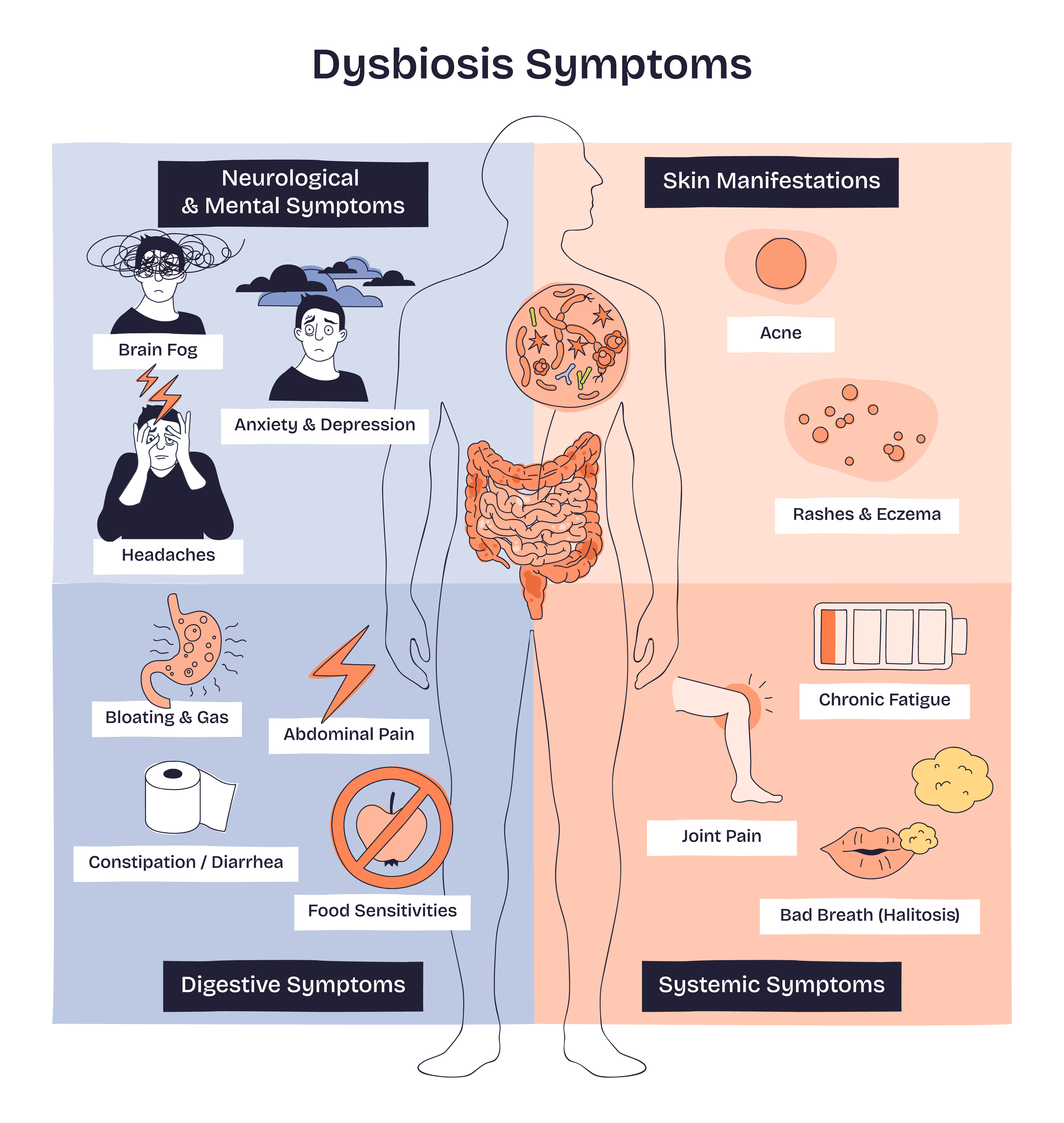
One of the reasons gut dysfunction goes unrecognized for so long is that its symptoms are easy to dismiss or attribute to other causes. Below is a broader picture of what gut imbalance can look like.
Digestive symptoms are the most obvious signals. These include ongoing abdominal discomfort, cramping, bloating that worsens throughout the day, excessive gas, irregular bowel habits, and a general sense that food is not being digested well. Bloating that appears unrelated to specific meals, or that persists regardless of what you eat, is particularly worth paying attention to.
Brain fog and mood changes are among the most commonly overlooked signs of gut dysfunction. If you experience unexplained anxiety, low mood, irritability, or difficulty concentrating, and emotional stress does not fully account for it, the gut-brain connection may be worth exploring.
Immune disregulation is another area where gut health plays a central role. The gut houses a significant portion of the body's immune tissue. When the gut barrier is compromised, immune signaling can become disregulated in ways that may contribute to autoimmune activity and increased susceptibility to illness.
Skin conditions such as eczema, acne, rosacea, and unexplained rashes can sometimes trace back to gut imbalance. The gut influences inflammatory pathways that affect the skin, which is why chronic or treatment-resistant skin issues are sometimes viewed as an external reflection of internal disruption.
Fatigue that persists even after adequate sleep is another signal worth noting. Poor gut health can impair the absorption of key nutrients, including iron, B12, and magnesium, all of which are essential for energy production.
Unexplained weight changes, either gain or loss, without any corresponding change in diet or activity level, can also be connected to gut health and microbiome imbalance.
What Causes the Gut to Dysfunction in the First Place?
Understanding the root causes of gut dysfunction is central to the functional health perspective. Rather than simply managing symptoms, the goal is to understand what disrupted the system in the first place.
Diet is one of the most significant contributors. The standard Western diet, high in processed foods, refined sugars, and low in fiber and whole plant foods, reduces the diversity of the gut microbiome, promotes dysbiosis, and increases intestinal permeability. Our ancestors likely consumed between 100 and 150 grams of fiber per day. The average American today consumes fewer than 15 grams. Fiber feeds the beneficial bacteria in the gut, which in turn produce compounds that nourish the gut lining and support immune function.
Chronic stress is another major driver. Prolonged stress elevates cortisol levels, which can make the gut lining more permeable and shift the balance of bacteria in ways that promote inflammation and dysfunction.
Poor sleep is often underestimated as a gut health factor. Research has shown that just two days of sleep disruption can increase the presence of bacteria associated with weight gain and metabolic dysfunction. Shift work, inconsistent sleep schedules, and late-night eating all negatively affect the gut microbiome.
Antibiotics and certain medications, while sometimes medically necessary, can significantly disrupt the gut microbiome by eliminating beneficial bacteria alongside harmful ones. This disruption can have lasting effects on gut balance if not addressed.
Low fiber intake, as mentioned above, deprives the gut microbiome of its primary fuel source. Without adequate fiber, beneficial bacteria decline, and the conditions that support a healthy gut lining are undermined.
What This Means for the Average Person
If you are reading this and recognizing yourself in some of these descriptions, you are not alone, and you are not imagining things. Gut dysfunction is extraordinarily common, and its effects ripple outward into nearly every system in the body.
The implications of this are significant. It means that symptoms you may have been told are unrelated, such as fatigue, skin issues, mood instability, and digestive discomfort, may in fact share a common root. It means that addressing gut health is not just about improving digestion. It is about supporting the foundation upon which so many other aspects of health depend.
From a functional perspective, the gut is not just a digestive organ. It is a central hub of immune activity, hormonal signaling, and neurological communication. When it is not functioning well, the effects are felt throughout the entire body.
Simple, Foundational Habits That Support Gut Health
Prioritizing whole, plant-based foods and reducing reliance on processed and refined foods is one of the most consistently supported approaches. Gradually increasing fiber intake over several weeks allows the gut microbiome time to adjust without causing excessive gas or bloating.
Managing stress through practices such as mindfulness, breathwork, or gentle movement supports the gut-brain axis and helps regulate the hormonal responses that can compromise gut integrity.
Protecting sleep by maintaining a consistent schedule and avoiding late-night eating supports the gut microbiome and the hormonal rhythms that keep it in balance.
Limiting unnecessary antibiotic use and being mindful of how medications affect the gut are also important considerations, particularly when gut symptoms arise in the aftermath of antibiotic treatment.
Incorporating fermented foods and prebiotic-rich foods into the diet can support microbial diversity, though individual responses vary and what works for one person may not work for another.
Conclusion
The gut is a remarkably resilient system, but it requires the right environment to function well. When that environment is disrupted, whether by diet, stress, sleep deprivation, or other factors, the consequences extend far beyond digestion.
Understanding this connection is the first step. The body is not a collection of isolated systems. It is an integrated whole, and the gut sits at the center of that integration in ways that science is only beginning to fully appreciate.
If you have been living with symptoms that feel disconnected or unexplained, it may be worth turning your attention inward, specifically to the health of your gut. The answers to many persistent health questions often begin there and we can help get those answers and guide you in the next steps.