Cesarean Scar Mobilization
If you have had a cesarean section, there is a good chance that no one told you what to do with your scar after you left the hospital. You were handed a list of restrictions, told to rest, and sent home. But what happens to that scar over the months and years that follow? The answer may surprise you, and it has far more to do with your overall health than most people realize.
A C-Section Is Major Surgery
This point deserves more attention than it typically receives. A cesarean section involves cutting through multiple layers of tissue, including the skin, subcutaneous fat, the connective tissue layer known as fascia, the abdominal muscles, and ultimately the uterine wall itself. That is a significant disruption to the body, and the healing process that follows is equally significant.
In the United States alone, over one million women deliver by cesarean each year, making it the most commonly performed surgery in the country. Despite how common it is, the long-term implications of the scar it leaves behind are rarely discussed in a meaningful way.
What Is Scar Tissue, and Why Does It Behave Differently?
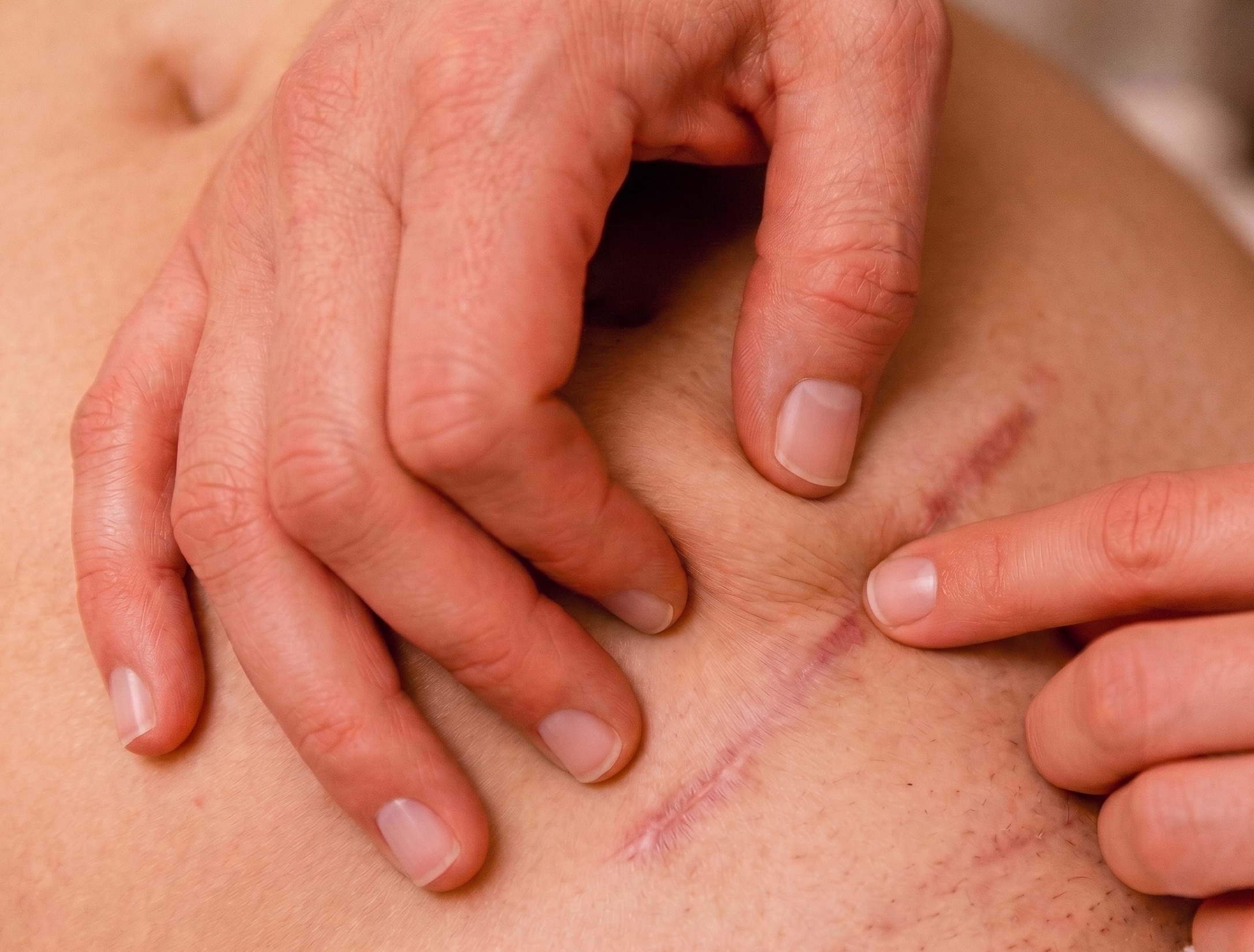
To understand why a cesarean scar can cause problems, it helps to understand what scar tissue actually is.
When the body heals from any wound or surgical incision, it lays down new tissue made of collagen, the same protein found in healthy tissue throughout the body. However, the way that collagen is arranged in scar tissue is fundamentally different from the way it is arranged in the original tissue.
In healthy tissue, collagen fibers run in an organized, parallel direction, allowing the tissue to move and function smoothly. In scar tissue, those fibers are laid down in a disorganized, multi-directional pattern. Think of it like a game of pick-up sticks, with fibers going every which way rather than in a clean, uniform direction. This disorganization is what makes scar tissue less flexible and more prone to creating tension in the surrounding areas.
Because a cesarean incision passes through so many layers of tissue, each of those layers forms its own scar. Over time, those layers can begin to adhere to one another, creating what are known as adhesions. These adhesions can restrict movement and create tension that radiates far beyond the scar itself.
The Ripple Effect: How a Scar Can Affect the Whole Body
This is where things get particularly interesting from a functional and holistic perspective. The body is not a collection of isolated parts. Every structure is connected to the next, and when one area is disrupted, the effects can travel in ways that seem completely unrelated on the surface.
Research shows that 77.4% of women experience pain immediately following a cesarean, and between 9% and 18% go on to develop chronic pain lasting more than three months after an elective procedure. But pain at the incision site is only one piece of the picture.
Pelvic Floor Dysfunction
Even though a cesarean bypasses the vaginal canal, the pelvic floor is not exempt from the consequences. The abdominal wall and the pelvic floor are intimately connected through layers of fascia and muscle. When scar tissue creates tension or restriction in the abdomen, that tension can pull on the pelvic floor, contributing to symptoms like urinary urgency, increased frequency of urination, and bowel irregularities such as constipation.
Low Back Pain
When adhesions form at the incision site, they can create a pulling sensation toward the front of the body. In response, the low back becomes overstretched and strained as it tries to compensate for that forward pull. This is one reason why many women with cesarean scars develop chronic low back discomfort that seems to have no obvious explanation.
Core Muscle Dysfunction
The muscles beneath and around the scar, including the deep core muscles that support posture and stability, can become inhibited when the overlying tissue is stiff or restricted. In functional medicine, we understand that the brain and the body are in constant communication. When scar tissue disrupts that communication, the muscles in the area may not activate properly, leading to weakness and instability.
Numbness and Altered Sensation
The nerves that run near the cesarean incision, including the inguinal and iliohypogastric nerves, can be affected by the healing process. This can result in numbness, tingling, or heightened sensitivity in and around the scar. Some women describe a strange, disconnected feeling in that area of their abdomen that persists for years.
Pain with Intercourse
Scar tissue and adhesions in the lower abdomen can contribute to pain during sexual intercourse, particularly with deeper penetration. This is a symptom that many women feel reluctant to discuss, but it is more common than most people realize and is directly connected to the mechanical changes that occur as a result of the scar.
Reduced Mobility in Daily Life
Something as simple as reaching overhead into a cabinet or wearing fitted clothing can become uncomfortable when scar tissue is restricting the natural movement of the abdominal wall. The body adapts to these restrictions over time, often in ways that create secondary tension patterns elsewhere.
The Emotional Layer
From a holistic standpoint, the body and the mind are never truly separate. Many women report a strong emotional response to their cesarean scar, including feelings of disconnection from that part of their body, anxiety about touching the incision, or emotional overwhelm when thinking about the surgery itself.
This is a completely understandable response. However, it is worth noting that avoiding the scar, both physically and emotionally, can actually reinforce the patterns of tension and disconnection that develop over time. Gently reestablishing a relationship with that tissue is part of the broader healing process.
What Is Scar Mobilization?

Scar mobilization, sometimes referred to as soft tissue mobilization, is a manual technique used to improve the flexibility and movement of scar tissue and the layers beneath it. It can be performed by a trained professional or, in many cases, by the individual at home.
The goal of scar mobilization is to encourage the disorganized collagen fibers within the scar to realign in a more functional direction, reducing restriction and improving how the tissue layers move in relation to one another. Research has shown that this technique can help reduce pain, increase local blood flow, soften and flatten the scar over time, and improve the brain's ability to connect with the surrounding muscles.
One particularly encouraging finding from research is that you do not need to be an expert to benefit from scar mobilization. Studies have found that both generalized and more specific techniques produce significant improvements in pain and scar mobility, with no meaningful difference between the two approaches.
When Can You Begin?
In the very early days following surgery, gentle desensitization of the skin around the incision can begin. This involves using different textures, such as a soft cotton ball or a washcloth, to lightly stimulate the skin near the scar. This helps the nervous system begin to process sensation in that area.
As the external wound closes and healing progresses, typically around weeks three to six, gentle work on the scar itself can begin. By six weeks postpartum, approximately 50% of the tensile strength of the tissue has been restored, and by twelve weeks, that figure rises to around 75%.
Importantly, it is never too late to begin. Old scars, even those that are years or decades old, can still respond to mobilization. The tissue remains capable of change long after the initial healing period has passed.
The Broader Holistic Picture
From a functional and holistic perspective, the cesarean scar is not just a cosmetic concern or a localized source of discomfort. It is a window into the broader health of the abdominal and pelvic region, and by extension, the entire body.
The deep core system, which includes the diaphragm, the deep abdominal muscles, the pelvic floor, and the deep muscles of the low back, functions as an integrated unit. When one component of that system is compromised by scar tissue or adhesions, the others must compensate. Over time, those compensations can contribute to a wide range of symptoms that may seem completely unrelated to the original surgery.
Supporting the health of the scar is, in many ways, an act of supporting the health of the whole system.
Conclusion
A cesarean scar is far more than a line on the skin. It represents a significant disruption to multiple layers of tissue, and when left unaddressed, it can contribute to a surprising range of physical symptoms, from pelvic floor dysfunction and low back pain to digestive irregularities and altered sensation. These connections are not coincidental. They reflect the deeply integrated nature of the human body.
If you have had a cesarean section, whether recently or many years ago, it is worth taking the time to understand your scar and what it may be communicating about the health of the surrounding tissue. Consulting with a qualified pelvic floor physical therapist or a practitioner who takes a whole-body approach to healing can be an important first step in that process.
Your body has an extraordinary capacity to heal. Giving it the attention and support it deserves is never a wasted effort.