
Carpal Tunnel Syndrome
Have you ever woken up in the middle of the night with your hand feeling numb, as if it had fallen asleep? Or noticed a strange tingling sensation running through your fingers while you were typing, driving, or simply holding your phone? Most people brush these sensations off as nothing more than a minor inconvenience. But what if your body was trying to tell you something far more important?
That tingling may be one of the earliest signs of carpal tunnel syndrome, a condition that affects millions of people and, when left unaddressed, can quietly progress into something far more serious. Understanding what is happening inside your wrist and why it matters is the first step toward listening to what your body is communicating.
What Is Carpal Tunnel Syndrome?
To understand carpal tunnel syndrome, it helps to picture the anatomy of your wrist. Running through the center of your wrist is a narrow passageway made up of bones and ligaments. This passageway is called the carpal tunnel, and inside it travels the median nerve, one of the primary nerves responsible for sensation and movement in your hand.
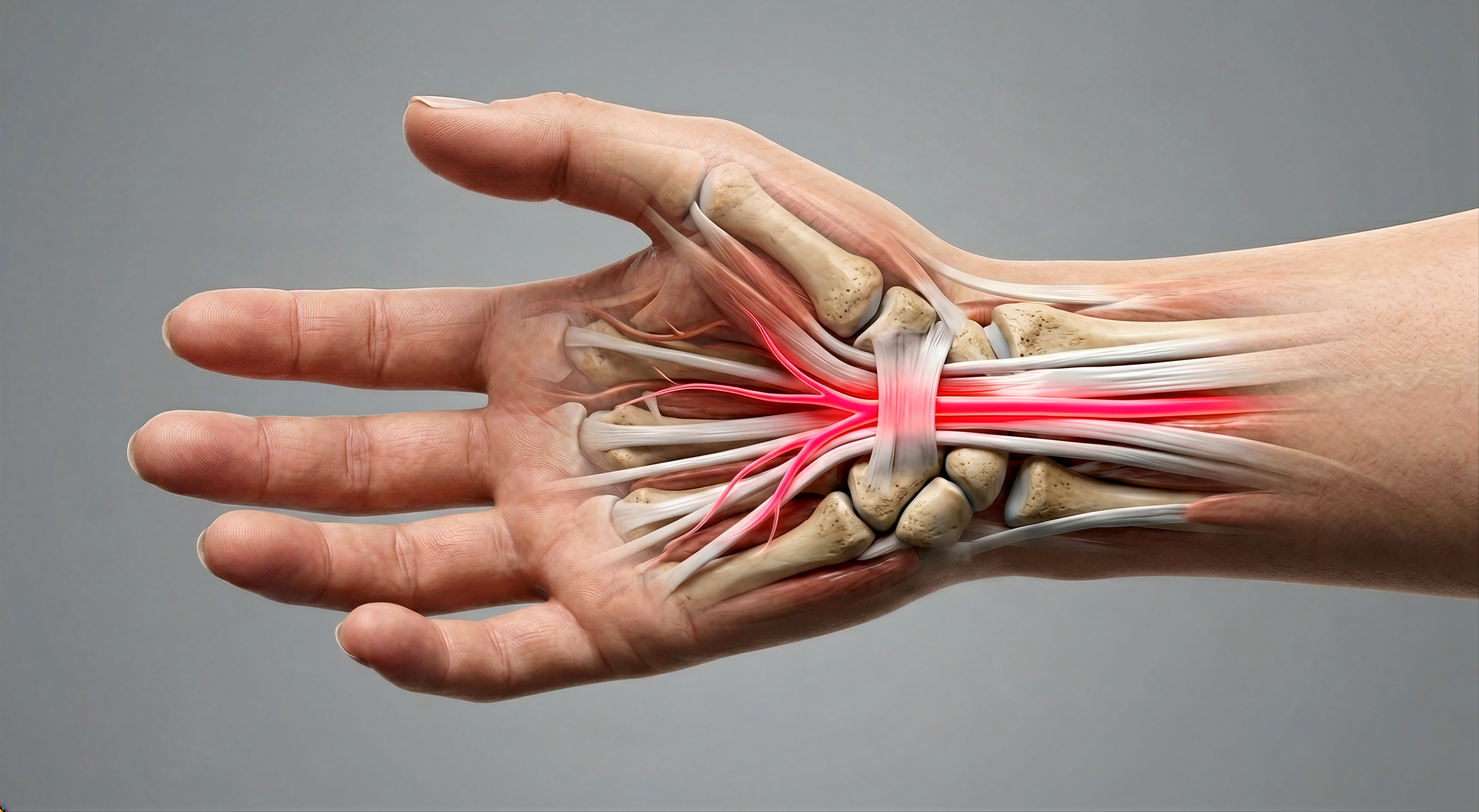
When the tissues inside this tunnel become inflamed or swollen for any reason, the space tightens and the median nerve becomes compressed. This compression is what produces the familiar symptoms of carpal tunnel syndrome: numbness, tingling, burning, and weakness in the hand and fingers.
From a functional health perspective, this compression is rarely the result of a single isolated event. It is almost always the body's response to a combination of factors that have been building over time.
What Does It Actually Feel Like?
The symptoms of carpal tunnel syndrome can be subtle at first, which is part of why so many people dismiss them in the early stages. The most common early experience is a tingling or numbness in the thumb, index finger, and middle finger. These sensations often appear at night, which can disrupt sleep and leave people feeling confused about what is causing the discomfort.
As the condition progresses, people may begin to notice:
- A burning or aching sensation in the wrist and hand
- Weakness in the thumb and a reduced ability to grip objects firmly
- Tingling or numbness that begins to occur during the day, not just at night
- A general sense that the hand feels clumsy or unreliable
In more advanced cases, the muscles at the base of the thumb can begin to visibly waste away, and permanent nerve damage becomes a real concern. This is why paying attention to early signals from the body is so important.
How Does It Progress Over Time?
Carpal tunnel syndrome does not typically appear all at once. It tends to develop in stages, and understanding those stages can help people recognize where they are in the process.
In the early stage, symptoms are usually mild and intermittent. Nighttime tingling is the hallmark sign, and the discomfort may come and go without significantly interfering with daily life. This stage can last anywhere from a few weeks to several months.
In the intermediate stage, symptoms become more frequent and begin to intrude on daily activities. Numbness and tingling may occur during the day, and weakness in the hand starts to become noticeable. This stage can persist for months to over a year depending on the individual.
In the severe stage, the nerve compression has been present long enough to cause more significant damage. Muscle wasting near the thumb becomes apparent, and the nerve may sustain permanent injury if the underlying causes are not addressed.
The timeline for progression varies widely from person to person. For some, the condition moves from mild to severe within a couple of months. For others, it may take two years or more. On average, progression from mild to severe takes roughly six months.
Who Is Most at Risk?
From a functional health standpoint, carpal tunnel syndrome is rarely a random occurrence. There are well-established patterns that make certain individuals more vulnerable, and many of these patterns point to deeper imbalances in the body.
Gender and age play a significant role. Women are three times more likely than men to develop the condition, and the peak age of occurrence falls between 40 and 60 years old. Hormonal shifts, which are common during this life stage, are believed to contribute to inflammation and fluid retention in the tissues surrounding the nerve.
Repetitive movement patterns are another major factor. People whose work or hobbies involve sustained or repetitive wrist motion, such as typing, sewing, assembly work, or playing certain musical instruments, place ongoing mechanical stress on the carpal tunnel.
Underlying health conditions are deeply connected to carpal tunnel syndrome. Diabetes, rheumatoid arthritis, and thyroid dysfunction all create systemic inflammation and metabolic changes that can increase pressure on the median nerve. From a holistic perspective, this connection is significant because it suggests that carpal tunnel syndrome is often a symptom of broader physiological imbalance rather than a purely localized problem.
Pregnancy is another notable risk factor. Many women experience carpal tunnel symptoms during pregnancy due to fluid retention and hormonal changes. While symptoms often improve after delivery, women who experience carpal tunnel during pregnancy have a higher risk of developing it again later in life.
Lifestyle factors also carry considerable weight. A higher body mass index, sedentary habits, smoking, excessive caffeine intake, and alcohol consumption have all been associated with an increased likelihood of developing carpal tunnel syndrome. These factors tend to promote systemic inflammation and poor circulation, both of which can compromise nerve health over time.
Genetics should not be overlooked either. Some individuals are born with naturally narrower carpal tunnels, making them inherently more susceptible to compression even without significant lifestyle risk factors.
The Functional Health Perspective: Why This Matters Beyond the Wrist
One of the most important insights from a functional and holistic perspective is that carpal tunnel syndrome is rarely just a wrist problem. The nerve compression happening in the carpal tunnel is often the visible expression of deeper systemic issues.
Chronic inflammation, blood sugar dysregulation, hormonal imbalances, and poor lymphatic circulation can all contribute to the swelling and tissue changes that compress the median nerve. When the body is in a state of ongoing low-grade inflammation, the tissues throughout the body, including those in the carpal tunnel, are affected.
This is why two people who perform the same repetitive tasks at work may have very different outcomes. One develops carpal tunnel syndrome while the other does not. The difference often lies in the underlying terrain of their health, including their metabolic function, inflammatory load, and nervous system resilience.
Understanding carpal tunnel syndrome through this lens shifts the conversation from simply managing a localized symptom to asking deeper questions about what the body as a whole is experiencing.
What the Average Person Should Know
For most people going about their daily lives, carpal tunnel syndrome may feel like a distant concern until it is not. The reality is that many of the risk factors associated with this condition are increasingly common in modern life. Long hours at a keyboard, limited physical movement, disrupted sleep, and diets that promote inflammation are widespread patterns that quietly set the stage for conditions like this one.
There are some general principles worth keeping in mind when it comes to supporting the health of your hands, wrists, and nervous system as a whole.
Being mindful of repetitive strain is a reasonable starting point. Alternating tasks, taking regular breaks, and keeping the wrists in a neutral position during activities can reduce the mechanical load on the carpal tunnel over time.
Paying attention to the broader picture of your health matters as well. Blood sugar balance, body weight, sleep quality, and inflammatory load all have documented connections to nerve health. Supporting these areas through thoughtful daily choices is a meaningful way to care for the body systemically.
Listening to early signals from the body is perhaps the most important takeaway. Nighttime tingling, occasional numbness, or a subtle sense of weakness in the hand are not symptoms to ignore. They are the body's early communication that something deserves attention.
Conclusion
Carpal tunnel syndrome is a condition that begins quietly and progresses gradually. What starts as an occasional tingling in the fingers at night can, over time, develop into persistent pain, weakness, and in severe cases, permanent nerve damage. The body rarely sends these signals without reason.
From a functional and holistic perspective, carpal tunnel syndrome invites us to look beyond the wrist and consider the full picture of our health. The connection between this condition and systemic factors like inflammation, metabolic health, hormonal balance, and lifestyle habits is well established. This means that how we care for our bodies on a daily basis has a genuine and meaningful impact on the health of our nerves and tissues.
If you have been noticing unusual sensations in your hands or wrists, take those signals seriously. The earlier the body's communication is acknowledged, the more options remain available. Your hands do a remarkable amount of work every single day. They deserve the same thoughtful attention you give to the rest of your health and we can give that to you.