
Breastfeeding and Latch Support
There is a quiet assumption that breastfeeding comes naturally, that a mother and her newborn will simply figure it out together in those first tender hours after birth. The truth, however, is far more nuanced. Breastfeeding is one of the most biologically profound things a human body can do, and yet it is also one of the most commonly misunderstood. When it works well, it is a seamless exchange of nourishment, immunity, and connection. When it does not, it can become a source of significant physical discomfort and emotional distress for a new mother who may not understand why things feel so difficult.
Understanding the mechanics and the biology behind breastfeeding can change everything. Let us walk through what your body is actually doing, what your baby needs, and what the signs are that things are going well or not so well.

Why the Latch Is the Foundation of Everything
In functional health, we often talk about the importance of getting the basics right before anything else. With breastfeeding, the latch is that foundational basic. It is not a small detail. It is the entire framework upon which a successful breastfeeding relationship is built.
When a baby latches onto only the nipple, rather than taking in a generous portion of the surrounding breast tissue, this is referred to as a shallow latch. A shallow latch creates friction between the nipple and the roof of the baby's mouth or tongue, which leads to soreness, cracking, and pain for the mother. More importantly from a physiological standpoint, a shallow latch means the baby cannot effectively stimulate the milk-making tissue deep within the breast. This directly affects milk supply over time.
A deep latch, by contrast, positions the nipple far back in the baby's mouth where it is protected from friction. The baby's tongue and lips create a seal around the breast tissue, and the suckling motion stimulates the glands responsible for milk production. This is the difference between a breastfeeding experience that supports the body and one that works against it.
How Often Should a Newborn Feed?
From a biological standpoint, newborns are designed to feed frequently. Human breast milk is highly digestible, which means it moves through a newborn's digestive system relatively quickly. This is not a flaw in breast milk. It is a feature. It means the baby is absorbing nutrients efficiently and signaling the mother's body to continue producing milk.
In the first month of life, most newborns will breastfeed somewhere between eight and twelve times per day. As the baby grows and feeding becomes more efficient, this typically settles to around seven to nine times per day by one to two months of age.
From a holistic perspective, this frequency is not just about calories. Each feeding session is a hormonal conversation between mother and baby. The act of suckling triggers the release of prolactin, the hormone responsible for milk production, and oxytocin, often called the bonding hormone. Frequent feeding in those early weeks is how the body learns how much milk to make and sustains that production going forward.
What a Good Latch Actually Looks and Feels Like
Many mothers are told to simply "make sure the latch is good" without being given the specific information they need to evaluate that for themselves. Here is what to look for.
When a baby is latched correctly, the feeding should feel comfortable. There may be a brief moment of pressure at the very beginning, but sustained pain is a signal that something needs to be adjusted. The baby's chin should be touching the breast, and their lips should be flanged outward rather than tucked inward. Their mouth should be open wide, covering a significant portion of the areola, which is the darker skin surrounding the nipple. You should be able to hear or see the baby swallowing, and you may notice the ears moving slightly with each suck.
After a feeding, your nipple should look largely the same as it did before, perhaps slightly elongated. If it looks flattened, creased, or shaped like a wedge, the latch was shallow and the nipple was being compressed. This is important information that your body is giving you.
Recognizing the Signs That Something Is Off
The body communicates clearly when something is not working. Persistent nipple soreness that does not improve after the first week or two is one of the most common signs that the latch needs attention. A clicking or smacking sound during feeding often indicates that the baby is losing the suction seal, which can happen with a shallow latch or in cases where there is a structural consideration such as a tongue-tie.
If a baby always seems hungry but is not gaining weight appropriately, this is a significant signal worth paying attention to. Weight gain in the early
weeks is one of the clearest indicators of whether a baby is transferring milk effectively. Alongside weight, diaper output tells a meaningful story. Roughly six to eight wet diapers per day is generally considered a reassuring sign that a baby is receiving adequate nourishment.
The Role of Feeding Positions
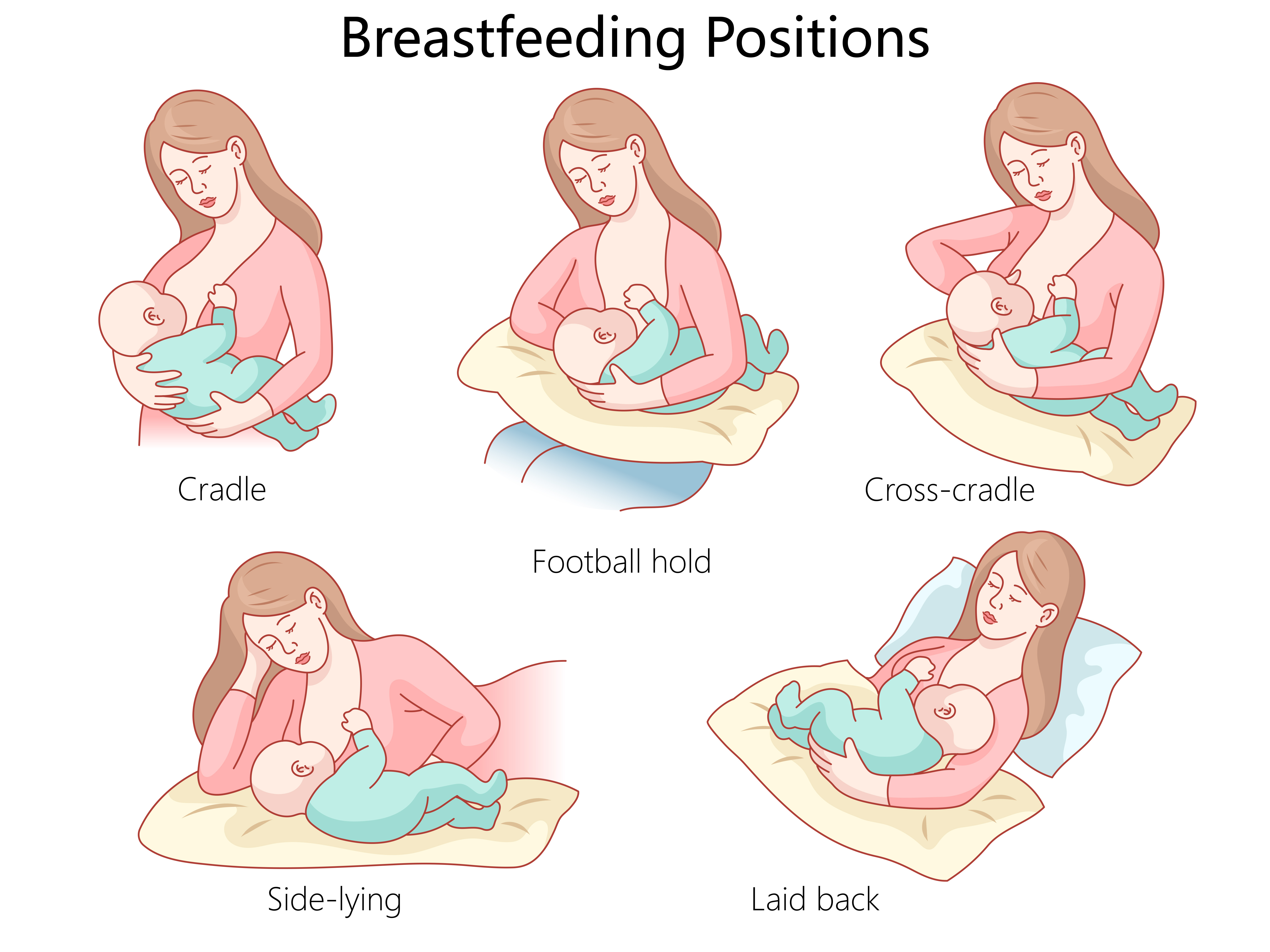
The position in which a mother holds her baby during feeding can have a considerable impact on the quality of the latch. Different positions work better for different body types, birth experiences, and baby temperaments.
The cradle hold is the most commonly recognized position, with the baby's head resting on the mother's forearm and the body facing hers. The laid-back or biological nurturing position, where the mother reclines and the baby rests against her body, takes advantage of gravity and the baby's natural instincts to seek the breast. This position is particularly supportive in the early days when both mother and baby are still learning.
The side-lying position allows the mother to rest while feeding, which can be especially supportive for those recovering from a cesarean birth. The football hold, where the baby is tucked alongside the mother's body with their legs extending behind her, can be helpful for mothers with larger breasts or those managing a strong milk let-down.
There is no single correct position. The right position is the one that allows for a deep, comfortable latch and feels sustainable for the mother.
Understanding Engorgement and Milk Supply
In the first few days after birth, as the body transitions from producing colostrum to producing mature milk, many mothers experience engorgement. The breasts become swollen, firm, and sometimes quite uncomfortable. This is a normal physiological process, though it can temporarily make latching more difficult because the breast tissue becomes too firm for the baby to latch onto deeply.
From a functional standpoint, the body is responding to the signals it has received. Frequent feeding in those early days is one of the most important things a mother can do to support a healthy milk supply going forward. The body operates on a supply and demand principle. The more consistently milk is removed from the breast, the more the body is signaled to produce.
Skipping feedings or going long stretches without nursing can reduce supply over time. Feeding on demand, meaning responding to the baby's hunger cues rather than watching the clock, is one of the most biologically aligned approaches to establishing and maintaining supply.
Hunger Cues and the Importance of Timing
One of the most practical pieces of information a new mother can have is how to recognize early hunger cues in her baby. Waiting until a baby is crying to begin a feeding session can make latching more difficult, as a distressed baby is harder to calm and position effectively.
Early hunger cues include rooting movements, where the baby turns their head from side to side, opens their mouth, or sucks on their hands or fingers. These are the body's early signals that it is ready to feed. Responding to these cues before the baby reaches the point of crying supports a calmer, more effective feeding experience.
Tongue-Tie and Lip-Tie: A Functional Perspective
One structural consideration that can significantly affect breastfeeding is tongue-tie, known medically as ankyloglossia. This occurs when the band of tissue connecting the underside of the tongue to the floor of the mouth is shorter, thicker, or tighter than typical, restricting the tongue's range of motion.

Research suggests that anywhere from one to eleven percent of newborns may have some degree of tongue-tie, and it appears to be more common in male infants. From a functional perspective, the tongue plays a central role in the mechanics of breastfeeding. It needs to extend, cup, and move in a coordinated way to draw milk from the breast effectively. When that range of motion is restricted, the baby may struggle to latch deeply, may make clicking sounds, may pop off the breast frequently, or may have difficulty transferring milk efficiently.
Lip-tie, where the tissue connecting the upper lip to the gum is similarly restrictive, can also affect the quality of the latch. These are structural considerations worth discussing with a knowledgeable healthcare provider or lactation consultant if breastfeeding challenges persist.
A Note on the Bigger Picture
Breastfeeding, when it works well, is one of the most remarkable examples of the body's innate intelligence. Breast milk is not simply a source of calories. It is a living fluid that shifts in composition based on the baby's developmental stage, the time of day, and even the specific pathogens the baby has been exposed to. It contains antibodies, beneficial bacteria, enzymes, hormones, and growth factors that no formula can fully replicate.
From a functional and holistic perspective, supporting the breastfeeding relationship means supporting the whole mother, her sleep, her nourishment, her stress levels, and her access to knowledgeable support. These factors do not exist in isolation from her ability to produce and provide milk.
Conclusion
Breastfeeding is both deeply natural and genuinely complex. Understanding the mechanics of a good latch, the biology of milk supply, the significance of feeding frequency, and the structural factors that can affect the process gives mothers the knowledge they need to navigate this experience with greater confidence and clarity.
If breastfeeding feels difficult, that difficulty is not a reflection of failure. It is often a signal that something specific needs attention, whether that is latch technique, positioning, a structural consideration in the baby, or simply more support and time. The body is remarkably adaptive, and with the right information and guidance, many breastfeeding challenges can be understood and addressed.
Any amount of breastfeeding a mother is able to provide carries value. And every mother who is asking questions, seeking information, and paying attention to her baby's cues is already doing something profoundly right. We can help, from tongue-ties all the way to milk supply we can support you on your journey as a mother.